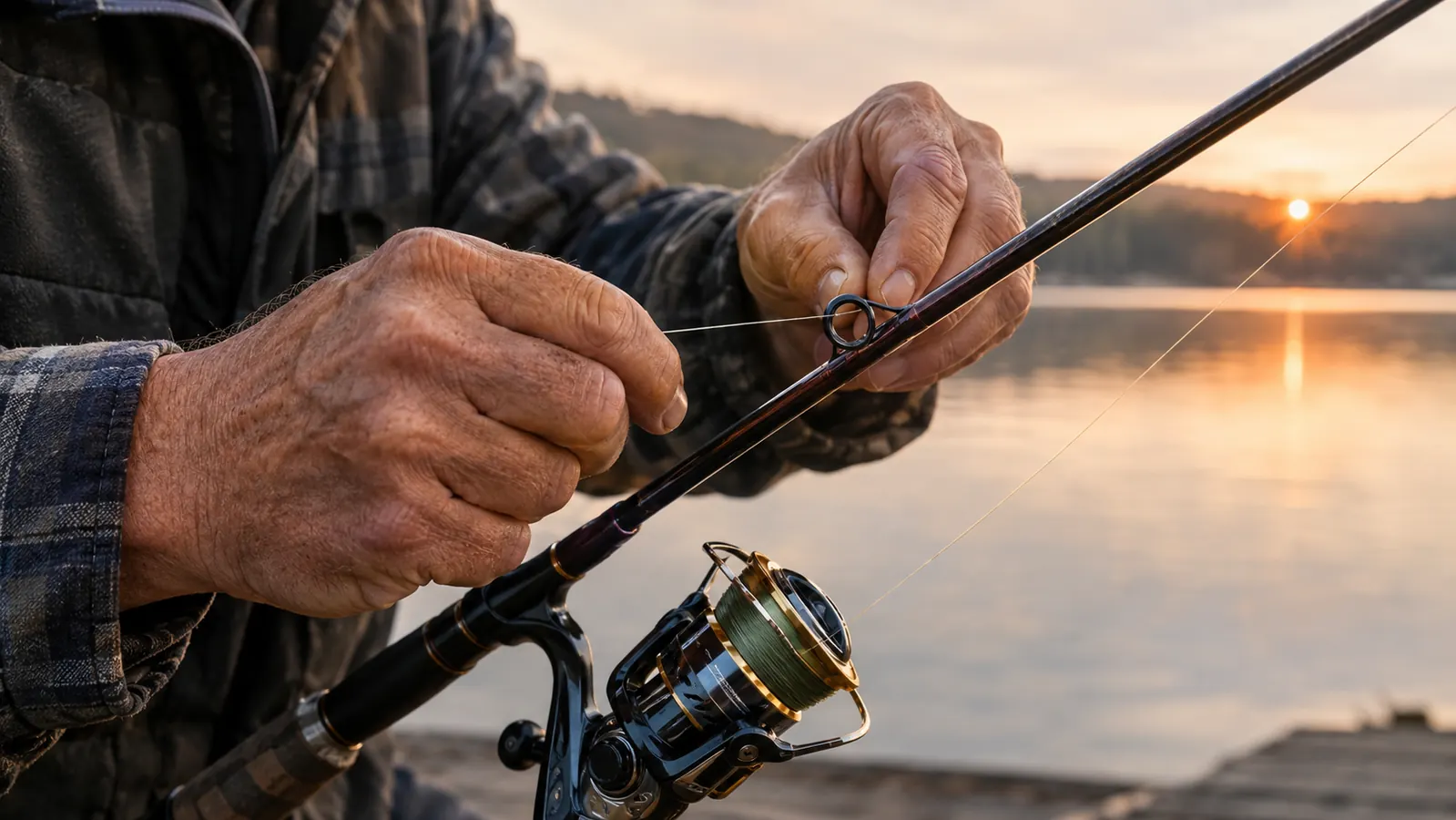
The first thing I check on any spinning reel that comes into my hands is not the drag or the bail. It is the line. If the line is old, coiled, or loaded crooked, nothing else on the reel matters. I have watched grown men lose fish on a brand new rod because they spooled it in a hurry, and I have watched a 13-year-old, my grandson Caleb, outfish all of them because his line was fresh and put on right. I am Lyle Satterwhite. I have fished Ohio water for about 45 years, and in all that time, cheap or neglected line has cost me more fish than any lure ever did. This article is the plain-spoken version of how I spool and choose line for a spinning reel, using the Berkley Trilene XL 6-pound monofilament that lives on most of my rods.
I am not going to sell you on the most expensive line in the tackle shop. I am going to tell you what works on Caesar Creek Lake, the Great Miami River, and the farm ponds I fish from my 14-foot jon boat or from the bank. You need line that casts thin, ties easily, and does not turn into a memory coil the first time the sun hits it. Monofilament does that better than anything I have tried, and the Berkley Trilene XL line is the one I keep coming back to. Here is the whole process, start to finish, the way I do it on my own reels.
Put Fresh Line On Before Your Next Trip
If your spinning reel still has last year's line on it, you are starting every cast a step behind. The Berkley Trilene XL 6-pound monofilament is what I spool on my own reels, and it is the line I buy for Caleb's rod every spring.
Amazon Check Today's Price on Amazon →Step 1: Measure Your Line Weight Against Your Rod and Reel
Before you buy any line, look at the side of your rod blank. Every spinning rod I own has the recommended lure weight and line weight printed right on the blank, usually just above the reel seat. That number is not a suggestion. If your rod says 6 to 12 pound line, a 6-pound test sits right at the bottom of that range, which is exactly where I want it for the finesse side of my fishing.
The reel matters too. A spinning reel has a spool with a stated line capacity, and that capacity assumes a particular line diameter. The Berkley Trilene XL in 6-pound test has a diameter of 0.22 millimeters, which is thin enough that a standard 2500 or 3000 size spinning reel will hold the full 330 yards with room to spare. If you try to put 30-pound line on a reel built for 8-pound line, you will get half a spool and a reel that casts poorly. Match the line to the reel, not to your ego.
One more thing I tell Caleb every time we spool a reel: the number on the package is breaking strength, not a promise. The Berkley Trilene XL lists a breaking strength of 6 pounds, or 2.7 kilograms, and the package is honest about it. I have caught channel cats on the Great Miami that should have snapped 6-pound line, but the line held because it was fresh, tied right, and the drag was set loose. Line weight is a starting point, not a limit.
Step 2: Soak the Spool or Wet Your Fingers
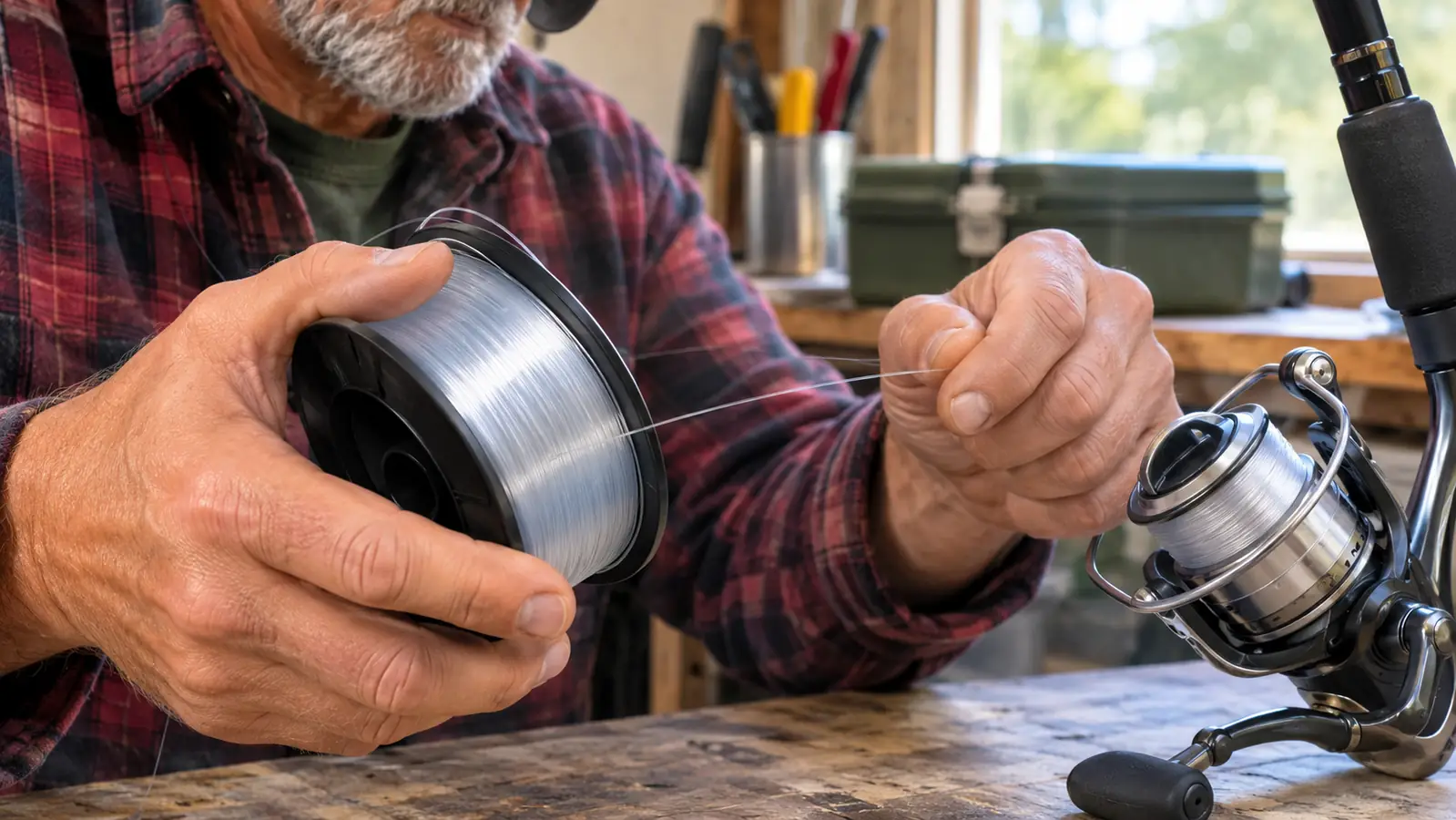
Monofilament has memory. It wants to return to the shape it was wound in on the factory spool, and if you let it, it will jump off your reel in loops the first time you cast. The fix is simple: get the line wet before it goes on the reel. I keep a bucket of water on the bench, or I just wet my fingers and run them down the line as it loads. Water acts as a lubricant, lets the line seat evenly, and cuts down the coiling that makes a spinning reel bird's nest on the first cast.
The Berkley Trilene XL is a single-strand monofilament made from a blend, and it has what the package calls optimal wet strength, meaning it holds up when submerged. That is the property you want in a line that will spend its whole life underwater. I have pulled this line off reels that sat in a rod locker all winter, and it still came off the spool in smooth layers instead of a tangled mess.
If you are spooling line straight from the box, do not let the line run off the factory spool in a way that twists it. I set the factory spool flat on the floor with the label up, so the line comes off the same way it was wound. Some folks use a pencil through the spool held by a helper. That works too. The point is to get the line from the box to the reel with as little twisting as possible.
Step 3: Load the Line Under Tension
Here is the mistake I see more than any other: people lay the line on the reel loose and let the reel do all the work. Loose line on a spinning reel is a disaster waiting for a big fish. It slips under the layers, digs in, and turns your drag into a guessing game. You want the line loaded tight enough that your thumbnail cannot easily press a dent into the coils on the spool.
The way I do it: run the line through the first guide, tie it to the spool with an arbor knot, and then pinch the line between my thumb and forefinger a few inches above the reel as I turn the handle. That pinch creates the tension the line needs to lay down tight and even. On a 6-pound Trilene XL, the line is thin enough that you barely feel it, but you can still feel the difference between a good layer and a sloppy one.
Keep the line level as it fills the spool. Spinning reels fill from the bottom up, and if you let the line pile up in one spot, you will cast into a mess. I move the line side to side with my fingers as I crank, the same way I would lay a rope in a coil. It takes an extra minute, and it saves you an hour of picking out wind knots later.
Step 4: Fill the Spool to the Right Height
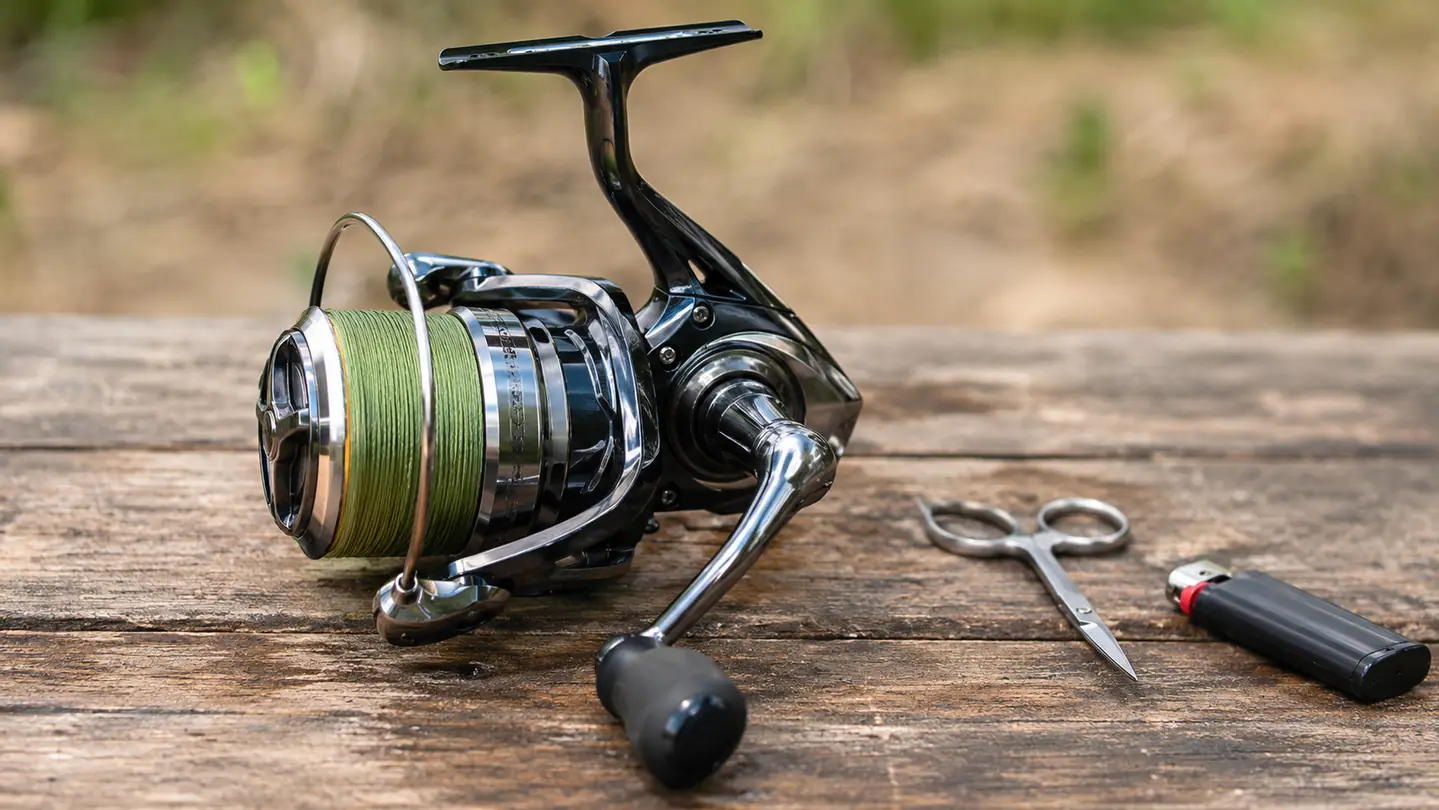
The spool on a spinning reel has a beveled lip, and the line should come up to just below that lip, usually about an eighth of an inch. Too little line and your casts will not go the distance, because the line has to climb over the edge of the spool on every cast. Too much line and it will loop over the lip and tangle on the first cast. The right fill is one of those details that separates a reel that casts like a dream from one that casts like a nightmare.
The Berkley Trilene XL comes in a 330-yard spool, and a full spool of 6-pound test will fill most freshwater spinning reels to the right height with a little left over. If you find yourself with too much line, do not try to fish with it. Strip off the extra until the fill looks right. If you come up short, you can add a few yards of backing line first, but I have never needed to with this line on my reels.
When the spool is filled right, the line should sit flat and even, with no high spots and no valleys. I run my thumbnail around the spool to feel for irregularities. A smooth fill means the line will come off the spool in clean loops, and clean loops mean longer casts and fewer tangles. That is the whole game.
Step 5: Tie a Good Knot and Trim the Tag End
The knot between your line and your lure is where most breakoffs happen, and it is the one thing you can fix in thirty seconds. For monofilament, I use the improved clinch knot: pass the line through the eye of the hook or lure, wrap it around the standing line five times, pass the tag end back through the loop next to the eye, and pull it tight. Wet the knot before you pull it snug. A dry knot heats up and weakens as it cinches down, and a weakened knot is how you lose the fish of the day.
Then trim the tag end close. I use a small pair of scissors, not my teeth. A long tag end on a spinning outfit will catch the line on the cast and cause a tangle before the lure ever hits the water. Trim it to a quarter inch or less, and you will never think about it again.
The same care goes for the arbor knot at the spool. Most people tie a sloppy overhand knot and call it done. I take the extra ten seconds to tie a proper arbor knot, which is just a slip knot around the spool that tightens down as you load the line. It keeps the line from slipping on the spool when you hook something heavy, and it costs you nothing.
What Else Helps
A few small habits make any line last longer. I keep my reels out of the sun when they are not in use, because heat and ultraviolet light are what break down monofilament. I also check the first few feet of line before every trip, because that is the part that rubs on rocks, runs through the guides, and takes the abuse. If it feels rough or looks frayed, I strip it off and retie. A 330-yard spool gives you plenty of line to work with, so there is no reason to fish with a weak section.
I also keep a spare spool of the Berkley Trilene XL in my tackle bag, especially when Caleb is with me. Kids find the worst snags, and a snag that costs a few yards of line is no big deal when you have a fresh spool in the boat. The line is sold in a range of break strengths from 2 pounds to 30, so you can keep a light spool for crappie and bluegill and a heavier one for catfish without changing reels.
Loose line on a spinning reel is a disaster waiting for a big fish. Load it tight, fill it to the lip, and you will cast all day without a tangle.
Spool It Right Once, Fish All Season
You do not need a dozen lines for freshwater fishing. You need one good monofilament, put on the reel the right way. The Berkley Trilene XL 6-pound test is the line I trust on my own rods and on Caleb's, and it is the line I would buy again tomorrow.
Amazon Check Today's Price on Amazon →