If you fish freshwater the way I do, from the bank at Caesar Creek Lake or out of a 14-foot aluminum jon boat on the Great Miami River, you have stood in the fishing aisle and stared at the same two spools more times than you can count. Berkley Trilene XL on one peg, braided line on the other. Both catch fish. Both have loyal followings. And both will cost you money, one way or another, if you pick the wrong one for the job. I am 61 years old, I have fished for about 45 years, and I have lost enough lures, fish and patience to cheap line to have a plain opinion. For most freshwater anglers, most days, Berkley Trilene XL monofilament is the better buy. This is the honest version of why, with the parts braid fans will argue about left in.
The short answer: Berkley Trilene XL is the right line for most freshwater fishing, but braid wins the jobs where abrasion and no-stretch hooksets matter more.
Spool up with Berkley Trilene XL before your next trip
For casting ease, knot strength and all-day forgiveness on a spinning reel, Trilene XL is the line I keep on most of my rods. It is also the line I hand Caleb when we fish together. Check today's price on Amazon before you head out.
Amazon Check Today's Price on Amazon →The Short Answer
Berkley Trilene XL is a single-strand monofilament blend with a 6-pound breaking strength in the size I use most, sold on 330-yard spools. The listing says it plainly: 6 lb test, 0.22 millimeter diameter, 330 yards, one strand, a blend. It casts smoothly, ties tight knots and gives a little when a bass surges, which keeps hooks from tearing out of soft mouths. Braided line is a different animal entirely. It is thin for its strength, has almost no stretch, and it shrugs off rocks, timber and zebra mussels. That last part is exactly why people love it, and also why it can work against you on a light spinning rod.
The real question is not which line is stronger. Both will land a 5-pound bass if you do your part. The question is which line matches the way you actually fish. If you cast light lures for crappie and bluegill, fish open water, or take a 13-year-old grandson who is still learning to set a hook, Berkley Trilene XL does the job with far less fuss. If you are dragging baits through flooded timber, fishing around bridge pilings or targeting fish with teeth, braid earns its spot on the reel. I own both. I use both. I just do not use them for the same thing.
| Berkley Trilene XL | Braided Line | |
|---|---|---|
| Stretch and feel | Single-strand monofilament gives a little under load, so hooksets are forgiving and treble hooks stay pinned in soft mouths | Almost no stretch, so you feel every tick of the bottom but you have to set hard and fast |
| Casting light lures | Easy-casting line that lays flat on a spinning reel, which matters for 1/8-ounce jigs and small worms | Stiff, wiry memory makes light-lure casting a chore on spinning gear |
| Abrasion resistance | Plenty for open water, docks and weed edges, but rocks and zebra mussels will nick it | Built to shrug off rocks, timber, pilings and shells without breaking down |
| Knots and handling | Ties tight, clamps down on itself, easy for a kid to manage in a breeze | Slick coating means knots need extra care, a wet pull and a slow seat |
| Visibility | Near-invisible in clear water, which matters on pressured reservoirs like Caesar Creek | High-vis colors are easy for you to see and sometimes easy for fish to see in gin-clear water |
| Best for | Bank and small-boat anglers chasing bass, crappie, bluegill and channel cats | Anglers working heavy cover, timber, docks, current and toothy fish |
Where Berkley Trilene XL Wins
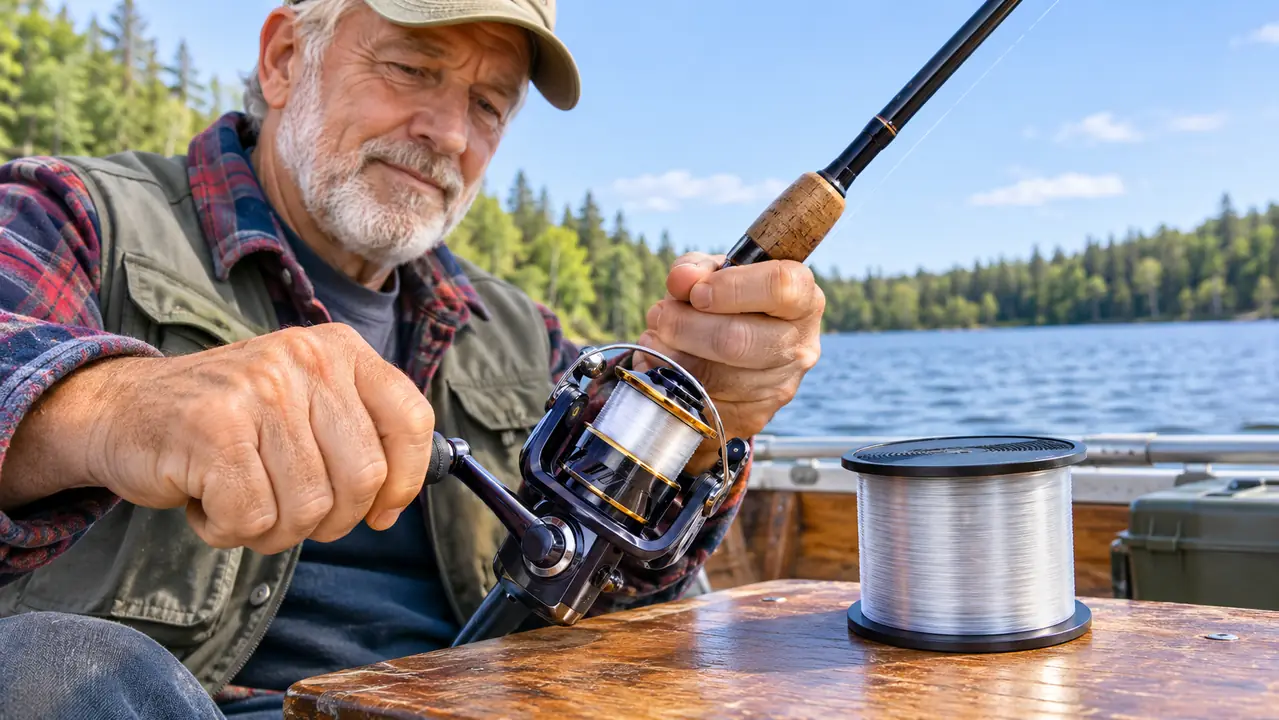
Berkley Trilene XL wins every time I am casting something light. The line is a single strand at 0.22 millimeters in the 6-pound test, and that thin, limp profile is exactly what lets a small jig fly off a spinning reel without turning into a bird's nest. Braid in the same strength is thinner still, but it is stiff and wiry, and on a light spinning rod it coils off the spool like an old telephone cord. I have watched Caleb fight a spool of braid for ten minutes on a breezy morning at the farm pond. Trilene XL just sits on the reel and behaves. That is not a small thing when the sun is going down and you have twenty minutes of good fishing left.
The stretch is the other thing people do not think about until they lose a fish. Monofilament gives a few percent when a bass turns, and that give is what keeps a treble hook from tearing a hole in a crappie's paper mouth or a bass's lip. Berkley Trilene XL also keeps its strength when it is wet, which is the only condition that matters once the lure hits the water. The listing calls it optimal wet strength, and after a season of use I believe it. For the way most of us fish, open banks, dock lines, weed edges and open water, that combination of easy casting, forgiving stretch and wet strength is worth more than raw toughness.
Where Braided Line Wins
I am not going to sit here and tell you braid is a gimmick, because it is not. When I fish the Great Miami around rock piles and log jams, braid shrugs off scrapes that would shred Berkley Trilene XL in a dozen casts. It has almost no stretch, so a hookset at 30 feet feels like you hit the fish in the mouth with the rod tip. And because braid is thin for its strength, you can spool more of it on the same reel. If your fishing is mostly heavy cover, current and structure, braid is the honest answer and I would not argue with you. I keep one rod spooled with it for exactly that work.
Braid also wins the maintenance argument in one specific way. It does not rot, and it does not take on a memory of the spool the way monofilament can after a long winter in the shed. But that same slick, tough character is a trade. Knots slip if you do not wet them and pull them slowly. Light lures cast poorly. And on a light-action rod, no stretch means a hard hookset can straighten a thin wire hook or rip it out of a soft mouth. The line is not better or worse. It is built for a different kind of fishing, and it punishes you when you use it for the wrong kind.
What the Specs Actually Tell You
The Berkley Trilene XL listing gives you the numbers that matter. Six-pound test. Three hundred thirty yards. A diameter of 0.22 millimeters, which the box also lists as 0.009 inches. Single strand. A blend. Breaking strength of 6 pounds. That last number is worth understanding. Breaking strength is not a suggestion. It is the point where the line lets go, and a good knot will hold right up to it if you tie it right. For bluegill, crappie, bass and channel cats in the size range most of us catch, 6-pound test is a sweet spot. It is heavy enough to land a good fish and light enough to cast all day.
The wet strength part matters more than the marketing makes it sound. Monofilament absorbs water, and a line that tests fine in the store can lose a noticeable chunk of strength after an hour on the water. Berkley says this one keeps its durability when submerged, and in my experience it does. I have pulled the same spool through a full season without replacing it, and the line still behaved. That is the practical difference between a line you fish and a line you babysit.
How It Fishes Over a Season
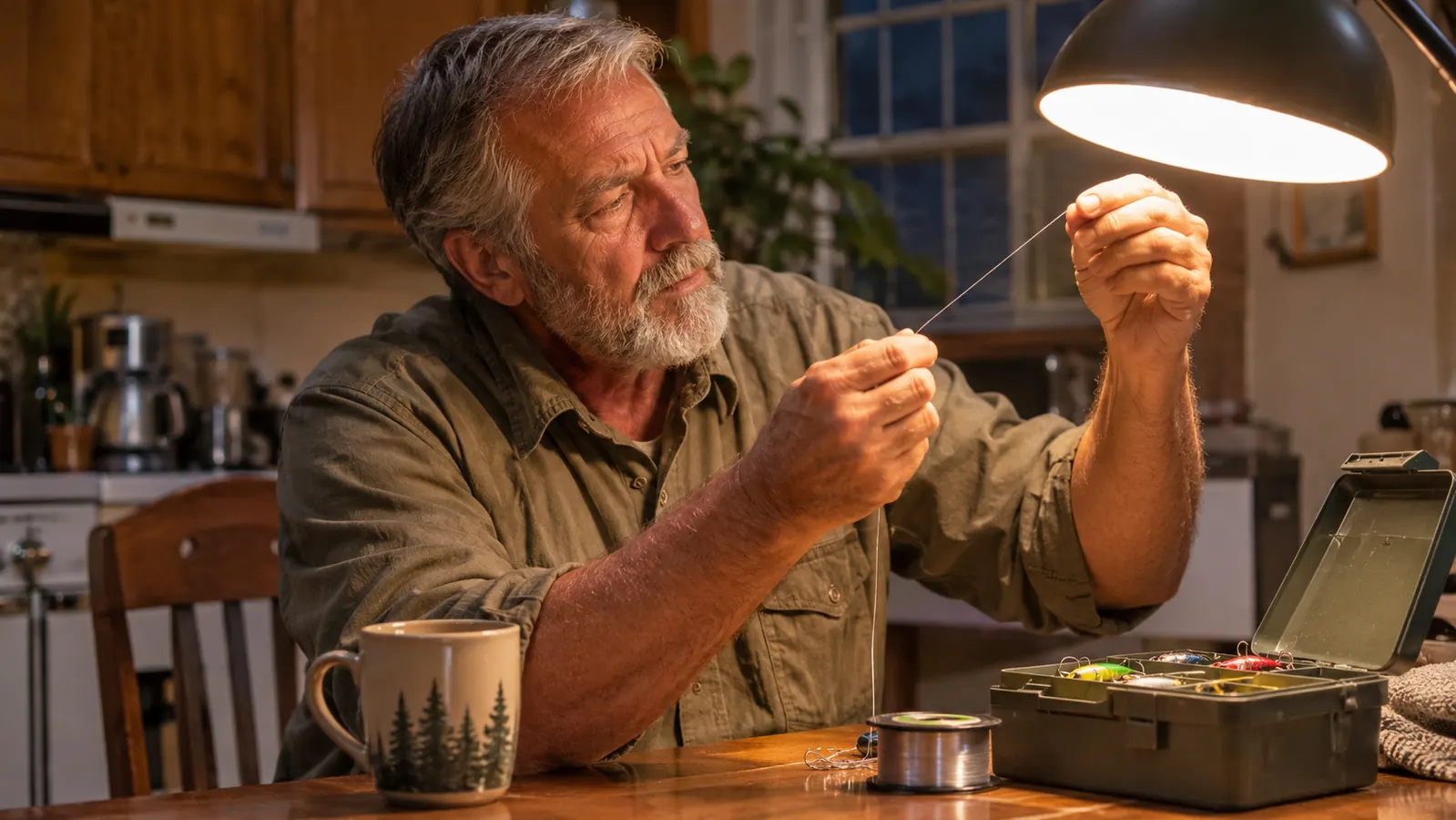
A spool of Berkley Trilene XL lasts me most of the season on my main spinning reel. I fish it hard, leave it in the sun, drag it through weeds and dunk it in the bottom of the boat. By late summer the first few feet get scuffed and I trim them back. The line underneath is still good. That is the practical test that matters. A line that fails in the store is one thing. A line that fails on the water is another, and this one does not fail on the water.
Braid, by comparison, will outlast the reel it is on. That is a real advantage if you hate respooling. But I have also seen braid sit on a rod for three years, get brittle in the sun and break at a knot that looked fine. Every line has a lifespan. Berkley Trilene XL tells you when it is tired, usually by getting stiff or fuzzy, and you replace it before it costs you a fish. That honesty is worth something.
The Knot Question Nobody Wants to Practice
Here is where Berkley Trilene XL separates itself for the average angler. Monofilament knots are forgiving. You can tie a clinch knot a little sloppy, wet it, pull it down, and it will still hold most of the time. Braid is the opposite. Its slick coating means a knot that is not seated perfectly can slip right out under load. I have seen Caleb lose a good bass because his braid knot pulled free on the cast. That is not a knock on braid. It is a fact of the material. If you fish braid, you practice knots until they are second nature. If you fish Berkley Trilene XL, you tie a decent knot and go fishing.
The other practical difference is what happens at the end of the day. Monofilament has some give, so a snagged lure can often be popped free with a steady pull instead of a snap. Braid does not stretch, so a hard snag usually means breaking off at the weakest point, which is often your knot. I would rather lose a hook than a whole rig. That alone has saved me money over the years, and it is the kind of thing nobody puts on the box.
How I Would Spend One Spool of Line
If you are only going to buy one spool this season, make it Berkley Trilene XL in 6-pound test. Put it on your light spinning reel, the one you grab for everything from bluegill to bass. You will cast better, tie better knots and lose fewer fish to pulled hooks. If you fish heavy cover more than I do, buy a spool of braid for one rod and keep the Trilene XL on the rest. That is not a compromise. It is matching the tool to the water, which is the whole point after 45 years.
The one thing I would not do is put braid on every rod just because it is tough. Toughness has a cost, and you pay it every time you cast a light lure, tie a knot in a hurry or hand the rod to a kid. Berkley Trilene XL costs less to fish in the ways that matter: fewer backlashes, fewer snapped knots, fewer lost fish. When the only thing between you and a good evening is a spool of line, simple is usually better.
Who Should Buy Which
Buy Berkley Trilene XL if you fish from the bank or a small boat, cast light lures, fish open water or take a kid along. It casts better on spinning gear, ties easier knots and forgives a late hookset. That last one matters more than most anglers admit. Buy braid if you are dragging baits through timber, bouncing off riprap, fishing current around bridge pilings or targeting fish with teeth. For that work, abrasion resistance and zero stretch are worth the handling fuss.
Me, I keep braid on one heavy rod for the river and Berkley Trilene XL on everything else. If you only own one spool and you fish the way most Ohio freshwater anglers fish, make it Berkley Trilene XL. You will lose fewer lures to backlashes, tie better knots at the boat and still land the fish that matters. That is the plain-spoken version, and I am sticking to it.
Keep it simple: put Trilene XL on the rods you use most
Most of my trips are open-water casts for bass and panfish, and Berkley Trilene XL handles them without drama. See today's price on Amazon and spool a reel before the weekend.
Amazon Check Today's Price on Amazon →