
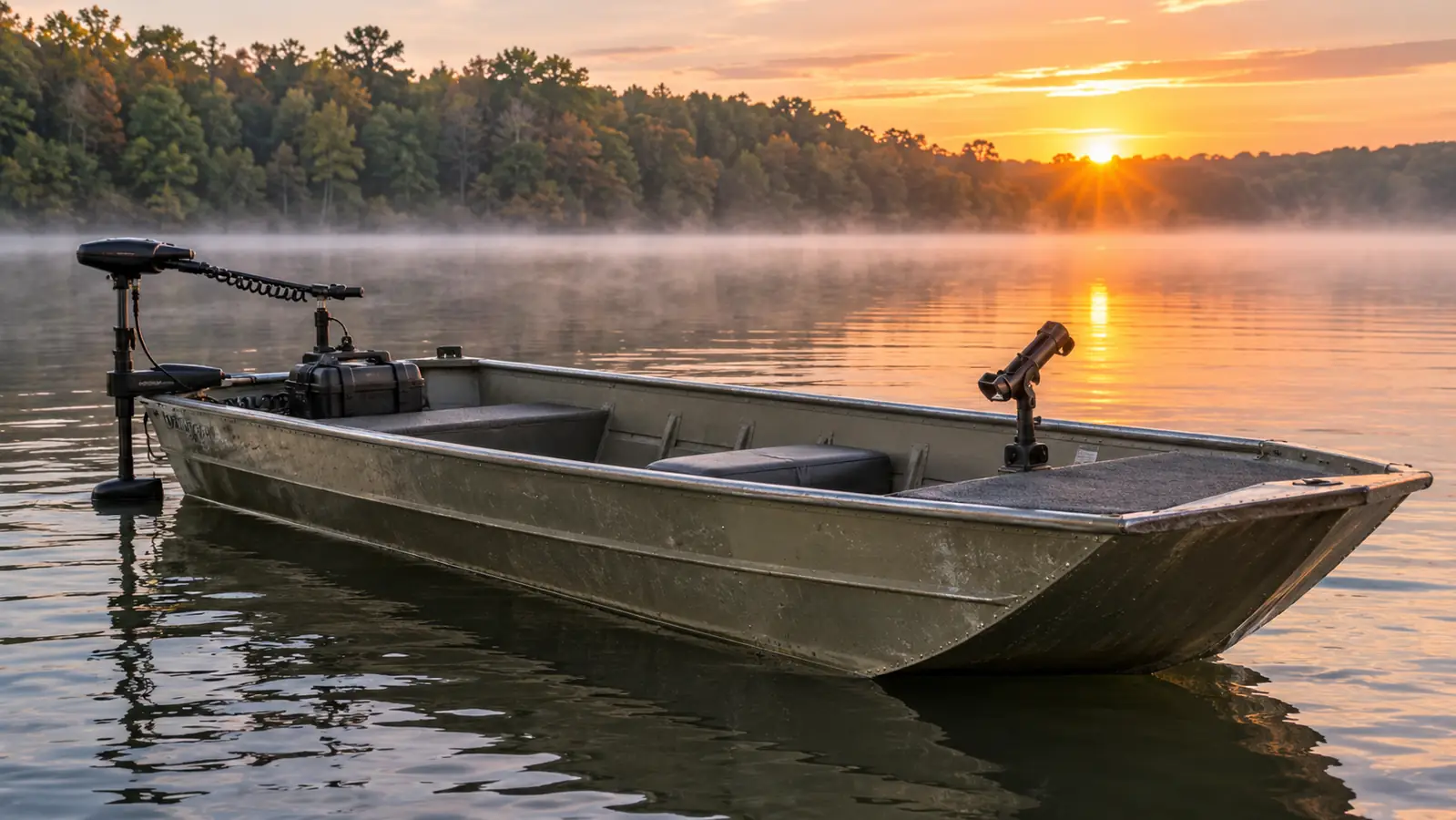
I have fished for 45 years, mostly from a 14-foot aluminum jon boat on Caesar Creek Lake and the Great Miami River, and for most of those years I did it without a fish finder. I caught fish anyway, but I also wasted plenty of mornings drifting over brush piles I could not see, and I watched my grandson Caleb stare at flat water while the crappie stayed deep. Three seasons ago I mounted a Garmin Striker 4 on the front of the boat, and it changed the way we fish. This is not a debate about which unit catches more fish. It is a plain-spoken comparison between a fixed-mount fish finder like the Garmin Striker 4 and a portable fish finder, so you can pick the one that fits the water you actually fish. If you are new to fish finders, or if you have been getting by with guesswork like I did, this will save you some money and some frustration.
Short answer: if you fish from a boat, buy the Garmin Striker 4. If you fish from the bank, buy a portable unit. I own the Garmin, and I would not trade it for a portable on my jon boat. But I understand why a bank angler would, and I am not going to pretend otherwise. The two tools solve different problems, and the right choice depends on where you cast from.
| Garmin Striker 4 | Portable Fish Finder | |
|---|---|---|
| Best for | Boat anglers who want a screen mounted at eye level | Bank and kayak anglers who want to pack light |
| Screen | 3.5-inch LCD with dedicated buttons, always on | Your phone screen, larger but shared with everything else |
| Setup | Mount it once with the tilt/swivel mount and transom transducer | Nothing to mount, but you rig it each trip |
| Portability | 8 ounces, but it is made to mount on a boat | Small enough for a backpack, works from the bank |
| Waypoints | Mark brush piles, stumps and docks on the waypoint map and navigate back | Phone apps can drop a pin, but the phone is doing double duty |
| Warranty | 1-year limited warranty from Garmin | Depends on the brand; read the listing |
Where Garmin Striker 4 Wins
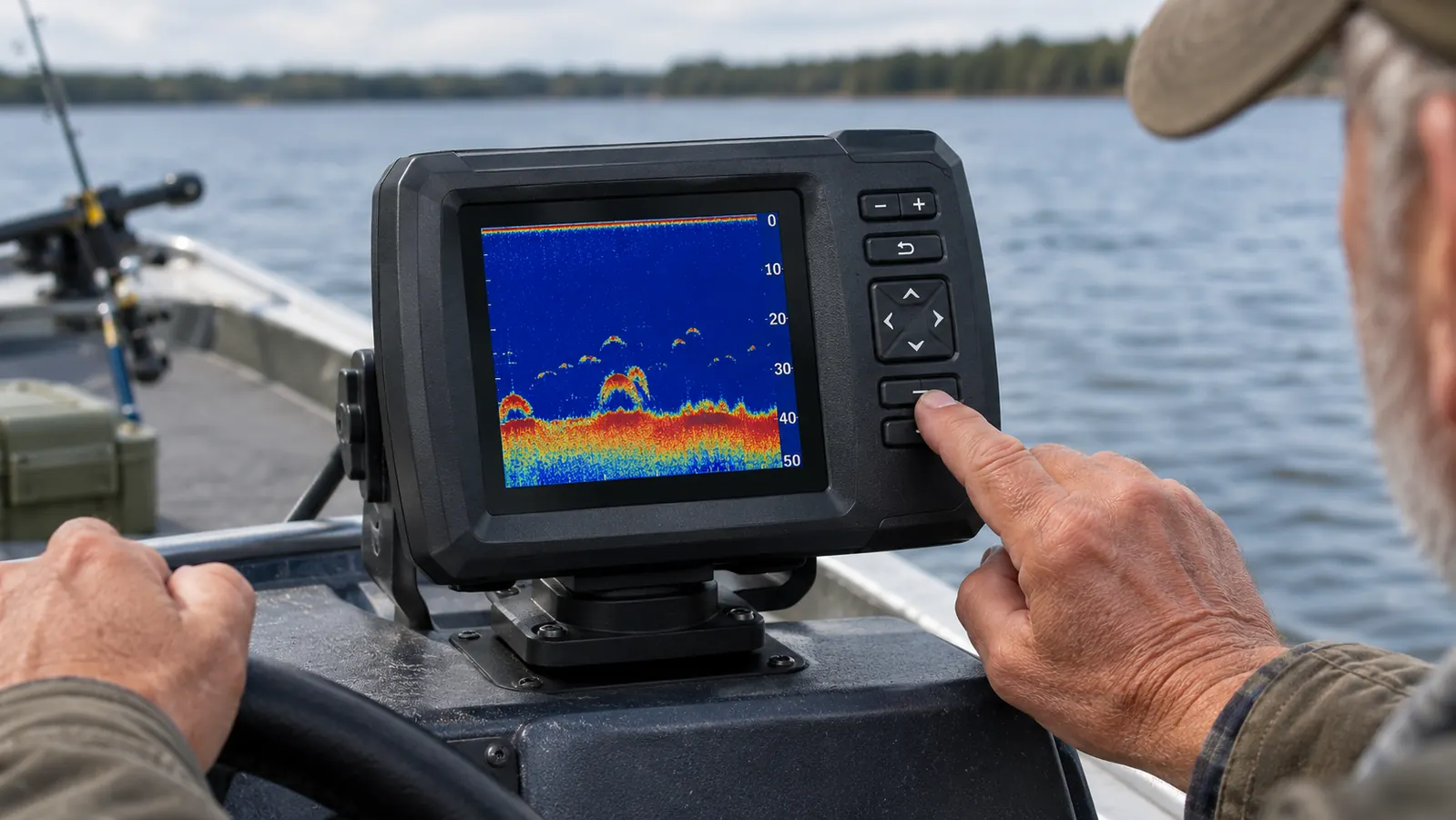
The first thing you notice on the water is the screen. The Striker 4 has a 3.5-inch LCD with dedicated buttons, so you do not have to take your phone out of your pocket to see what is below the boat. On a sunny morning on Caesar Creek, that matters. The display is 1.9 by 2.9 inches, easy to read from the back of a jon boat, and the keyed interface means I can change settings with wet hands without fumbling. I have used units with touchscreens, and they are fine until a wave hits. Buttons win on a small boat.
The second thing is the sonar. The Garmin uses CHIRP and ClearVu scanning sonar, and it is rated to 1,600 feet. I fish in 30 feet of water most days, so I will never use that full depth, but the detail near the bottom is what sold me. I can mark a brush pile on the waypoint map, leave it, and come back to the same spot three weeks later. That is the difference between fishing water and fishing a memory. On a reservoir like Caesar Creek, where the lake is full of flooded timber and old roadbeds, that waypoint map is the most useful tool I own.
The warranty is another reason I chose Garmin. It comes with a 1-year limited warranty, and the unit is battery powered, so there is no complicated wiring to deal with on a jon boat. The included components cover the fishfinder, the power and data cable, the tilt/swivel mount, the transducer and the transom hardware. That means you are not buying extra parts to get it on the water. For a retired machinist who likes things to fit the first time, that matters.
Where a Portable Fish Finder Wins
I am not going to argue that the Garmin is the right tool for every angler. If you fish from the bank nine trips out of ten, a portable fish finder makes more sense. There is no transducer mount to deal with, no tilt/swivel mount to bolt down, and no screen to leave in the sun. You pack it in a backpack, walk a farm pond, and drop the transducer in the water where you are standing. For a kid like Caleb fishing from the bank, that is a whole lot simpler than dragging a jon boat to the water.
The portable route also wins when you fish from a kayak or a rental boat where you cannot mount anything. The phone screen is bigger than the Striker 4's display, and you already have the phone with you. I have used a friend's portable unit on the Great Miami and it worked fine for marking a hole near the bank. It is not the tool I want for a day of trolling structure on a reservoir, but it is the right tool for a different kind of fishing. It is also easier to hand to a grandson who is just learning, because there is nothing to break on a boat.
Let me be honest about the tradeoff. A portable unit leans on your phone, and your phone is also your camera, your map and your way to call home. On a long day in the sun, that phone screen can be hard to see, and the battery drain is real. But if you are mostly fishing close to the bank, those problems are small compared to the problem of not having any sonar at all. A portable unit in your backpack beats a boat mount in your garage every single time.
I would rather have one screen mounted in front of me than a phone I have to dig out of my pocket every time the bottom changes.
If You Fish From a Boat, This Is the One I Would Buy Again
The Garmin Striker 4 gives you a dedicated screen, CHIRP sonar, a waypoint map and a mount you set up once. For the kind of fishing we do on Ohio reservoirs, that is worth more than a unit you have to unpack every trip. I have used mine for three seasons and I would buy the same unit again.
Amazon Check Today's Price on Amazon →Why I Did Not Switch to a Portable Unit
After a season of watching my friend use a portable unit from the bank, I thought about switching. The portability is real, and there were days I wished I could fish a farm pond without launching the boat. But the more I used the Garmin, the more I realized the tradeoff was not worth it for me. On the reservoir, I need the waypoint map to find brush piles and stumps that I marked weeks earlier. A phone app can drop a pin, but it cannot do what a dedicated unit does when the screen is right in front of me.
I also fish with Caleb, and I like that the Garmin is always there. We do not have to remember to charge a separate device or pack it in a bag. The Striker 4 is mounted, it is wired, and it is ready when we are. That may sound like a small thing, but on a Saturday morning when the fish are biting, the last thing I want to do is dig through a backpack for electronics.
How the Garmin Striker 4 Performs on the Water
I ran the Garmin Striker 4 for three full seasons before I wrote this, and the biggest surprise was how little I touched it after the first trip. The mount holds it where I put it, the transducer stays on the transom, and the buttons are simple enough that Caleb can work them. The unit weighs 8 ounces, so it is not a burden on the boat, and the battery setup is straightforward. I set it up once and it is ready every time we launch.
The other thing I learned is that a fish finder does not catch fish for you. It shows you where the fish can be, and then you still have to put a bait in front of them. What the Garmin does well is remove the guesswork about depth and structure. On a farm pond you can find the drop-off by watching your bobber. On a reservoir, the waypoint map is worth it by itself, because the lake is too big to fish by memory. I have marked stumps that I would have drifted over fifty times without knowing they were there.
I also learned that the 3.5-inch screen is the right size for a small boat. A bigger screen is nice in a bass boat, but on a 14-foot jon boat it would be in the way. The Striker 4 sits flat against the front deck, takes up almost no room, and leaves space for rods, tackle and a 13-year-old's feet. The panel mount and tilt/swivel mount give you options for where to put it, and once it is there, you forget about it.

How I Set It Up on My Jon Boat
The setup took me about an hour, and most of that was me being careful. The Striker 4 comes with the fishfinder, the power and data cable, the tilt/swivel mount, the transducer and the transom hardware. I mounted the display on the front deck with the panel mount, ran the cable along the gunwale, and clamped the transducer to the transom. The unit is battery powered, so I did not have to tap into the trolling motor battery, which kept the wiring simple.
The keyed interface is the part I appreciated most during setup. There is no menu to scroll through with a touchscreen, no pairing, no app to install. The dedicated buttons do what they say, and the manual is short enough to actually read. On a small boat, simple is better. I have helped friends wire up bigger units with network cables and transducers that need their own power source, and I will take the Striker 4's simplicity every time.
What About the Transducer?
The transducer is the part of any fish finder that people worry about, and I understand why. On a jon boat, the transom is thin and the motor is close, so you want the transducer mounted where it gets clean water. The Striker 4 comes with the transducer and transom hardware in the box, so you do not have to buy a separate mounting kit. I placed mine on the starboard side of the transom, just clear of the trolling motor, and I have not touched it since.
One thing I will tell you honestly: the transducer reads best when the boat is moving slow or sitting still. At full throttle on the river, you will see noise on the screen. That is true of almost every fish finder in this class, not just the Garmin. When I slow down to fish a bank, the picture cleans right up, and that is when it matters.
What I'd Tell a Friend
If we were sitting at my kitchen table in Dayton and you told me you were thinking about a fish finder, I would ask you one question first: where do you fish? If the answer is a boat, even a small one, I would point you to the Garmin Striker 4 and tell you to mount it once and forget it. If the answer is the bank of a farm pond, I would tell you to get a portable unit and keep your money in your pocket until you start fishing from a boat.
I would also tell you not to overthink it. The Garmin is not the fanciest fish finder on the market, and I am not going to pretend it is. It does not have every bell and whistle, and you will not see the kind of detail that a high-end unit shows. But it does the job it was built for, it is easy to use, and it has held up for three seasons on my boat. For the money, that is what most of us need.
Who Should Buy Which
Buy the Garmin Striker 4 if you have a boat, even a small one, and you fish water big enough to have structure worth marking. Buy a portable fish finder if you fish from the bank, the kayak, or a rental boat and you want something that fits in a backpack. I keep the Garmin on the jon boat for Caesar Creek and the river. If Caleb goes bank fishing on his own, I would tell him to start with a portable unit and move up when he starts fishing from a boat.
The bottom line is simple. The Garmin Striker 4 is the better tool for boat anglers who want a dedicated screen, reliable sonar and a waypoint map. A portable fish finder is the better tool for anglers who need to carry their electronics in a backpack. Neither one is wrong. The mistake is buying the other guy's tool because it worked for him, without thinking about the water you fish.
Put a Garmin Striker 4 on Your Boat Before the Next Trip
If you fish from a boat and you are tired of drifting over water you cannot see into, this is the unit I would buy again. It is simple to mount, simple to read, and it will still be on your boat three seasons from now. Check today's price and see if it fits your setup.
Amazon Check Today's Price on Amazon →