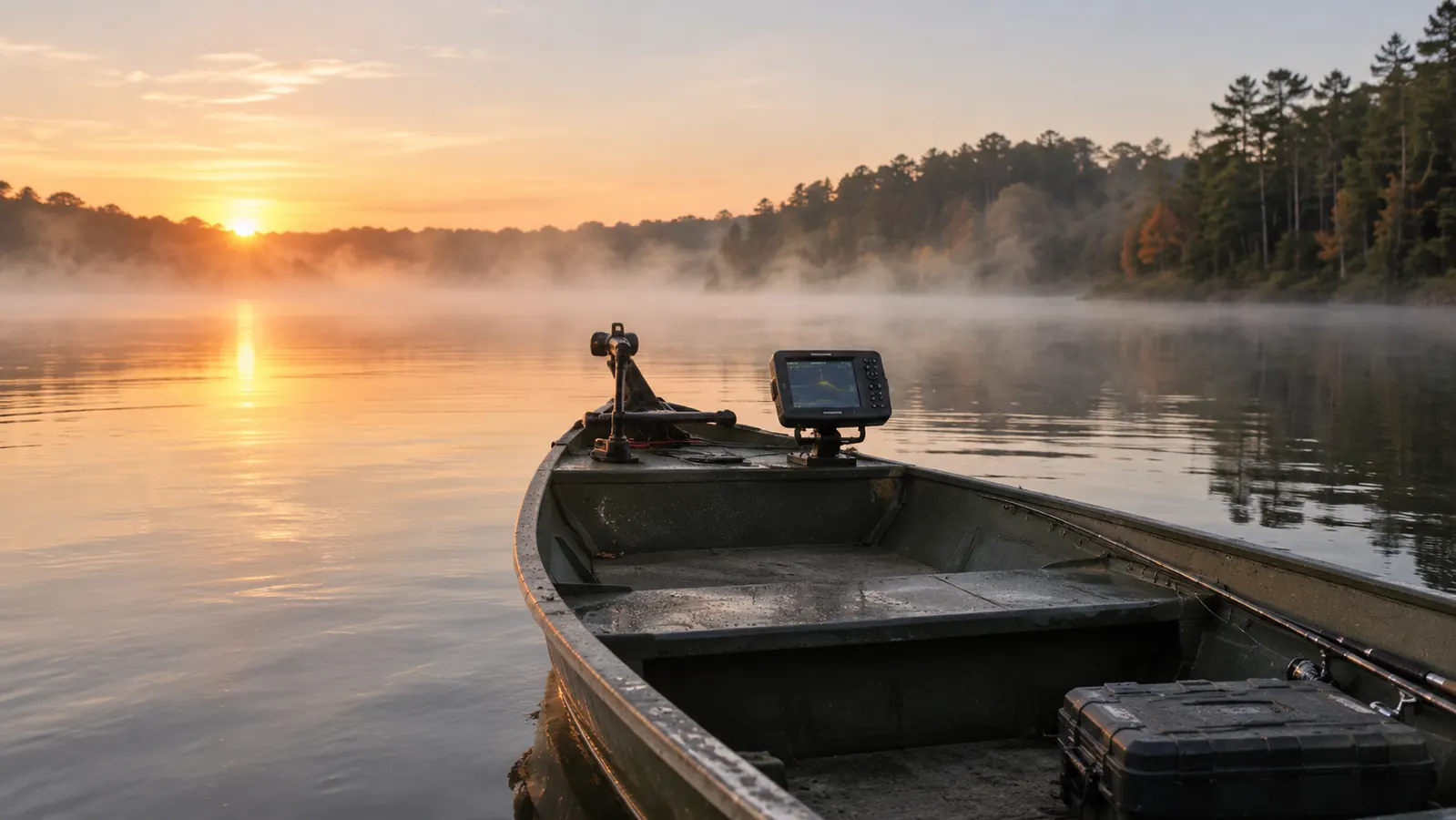
I spent a lot of years fishing Ohio reservoirs the hard way. I would idle out to a spot I remembered from last spring, drop the anchor, and fish water that had nothing under it. Some days that worked. Most days it meant a long ride home with the livewell empty. One morning in April 2023, I spent four hours dragging a jig across a flat on Caesar Creek Lake that I was certain held bass. It did not. I caught a single bluegill and ran my trolling motor battery down so low the jon boat barely crept back to the ramp. On the drive home I finally admitted that guessing was not a strategy. I had talked myself out of buying a fish finder for two years, telling myself I knew the lake well enough and that sonar was for tournament guys with fiberglass boats. That morning proved me wrong on all three counts. The Garmin Striker 4 changed more than I expected when I bolted one to the bow of my 14-foot jon boat two weeks later.
This is not a list of hype. It is ten plain reasons the Garmin Striker 4 earns its spot on my boat, in the order I noticed them.
Quit Fishing Empty Water
If you fish reservoirs from a small boat, the Garmin Striker 4 is the unit I'd start with. Check today's price on Amazon.
Amazon Check Today's Price on Amazon →It Shows You the Bottom Instead of Making You Guess
Caesar Creek Lake drops off in places you would never guess from the surface. The Garmin Striker 4 shows me the bottom in real time, so I stop wasting casts over flat, empty water. The 3.5-inch display is small, but it is big enough to read the important part: what is under the boat.
It Marks Brush Piles and Stumps So You Can Come Back
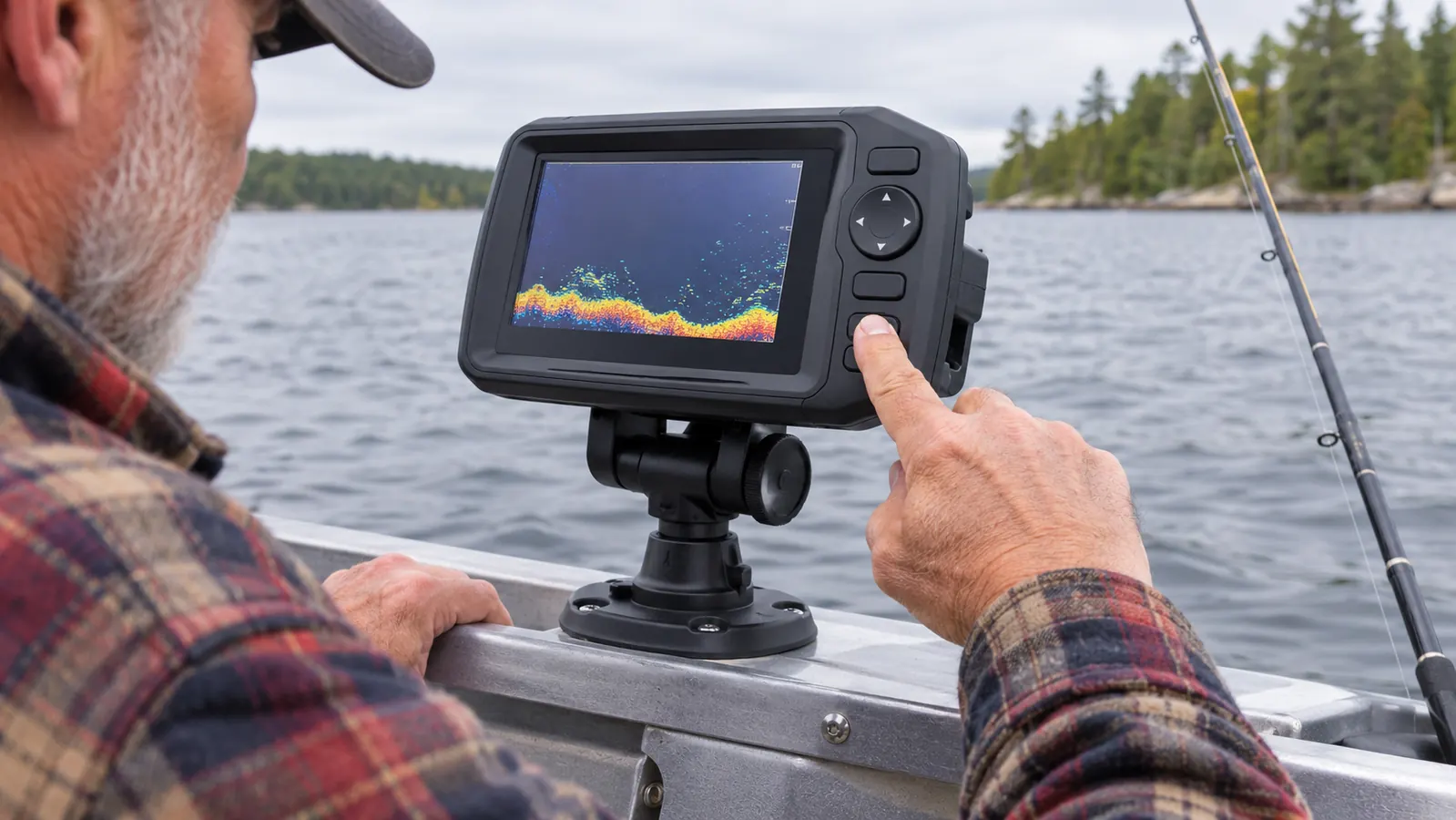
The waypoint map is the reason I bought this unit. When I find a brush pile holding crappie, I mark it. Next trip, I do not have to triangulate off a bent tree on the bank. I just follow the waypoint straight back to the spot. Last October, Caleb and I found a stump on the south end of Caesar Creek that was holding a school of crappie. I marked it, and we came back three weeks later. The unit put us within ten feet of the stump on the first pass, and we had a limit of nice slabs before nine in the morning. Before I had the Garmin, I tried to mark spots with a compass bearing and a mental picture of the shoreline. That worked until the water level dropped two feet and every landmark looked different. The waypoint does not care about water level. That alone has paid for the unit in saved trolling time.
It Finds the Breakline, Which Is Where the Fish Live
On a reservoir, the fish are almost always on a breakline: the edge where the bottom drops from six feet to twelve. Running the boat along that edge with the sonar running shows me exactly where it bends. I fish the bend, not the whole lake. The first time I tried this on the Great Miami River, I found a drop-off that bent hard around a sunken log in about nine feet of water. Two casts later, Caleb pulled a two-pound largemouth off that log. That was the moment the unit stopped being a gadget and started being a tool I reach for every trip. Before that, I fished on hope and habit, casting at whatever looked fishy from the bank and moving on when nothing bit. That works on a farm pond. It does not work on a reservoir where the bottom can drop ten feet in three boat lengths. The sonar takes the guesswork out of finding the edge, and the edge is where the fish are.
It Works on a Small Boat Without Taking Up Room
The unit weighs 8 ounces and the head measures 3.6 by 1.6 by 5.9 inches. On a 14-foot jon boat, space is precious. The tilt/swivel mount tucks it against the console, and the whole thing comes off in ten seconds when I trailer the boat.
The Buttons Are Simple Enough for a 13-Year-Old
My grandson Caleb runs the unit more than I do now. The keyed interface with dedicated buttons means he does not have to scroll through menus. He presses one button to mark a waypoint, and it is done. If a 13-year-old can run it without a manual, the interface is doing something right.
It Reads Depth to 1600 Feet, Far More Than Any Reservoir I Fish
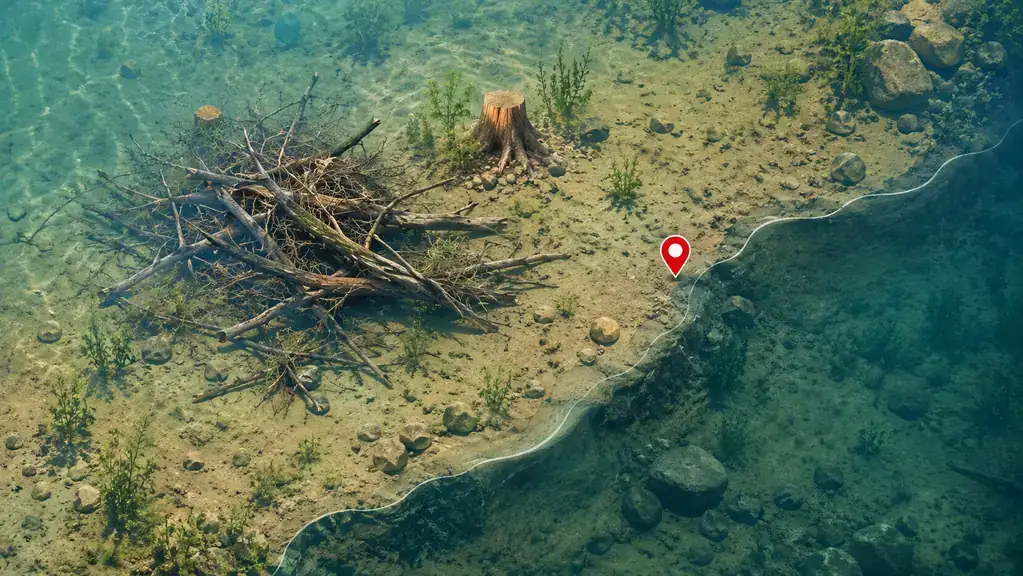
The maximum measuring depth is 1600 feet. The deepest hole I regularly fish is maybe 60 feet. I never worry about outrunning the unit's ability to see the bottom. It is always showing me something useful, even in the deepest parts of the Great Miami River.
It Runs Off the Boat Battery, So No Extra Gadgets
The Garmin Striker 4 is battery powered and runs off the same battery that runs my trolling motor. No separate pack to charge, no extra cables across the deck. I keep a spare 12-volt battery in the truck for long days, but the unit itself does not care where the power comes from.
It Shows Me More of What Is in the Water
The ClearVu scanning sonar shows more of what is around the boat, not just straight down. I see stumps off to the side before I run over them, and I see schools of baitfish holding off a point. That changes how I approach a stretch of water.
It Keeps Me Honest About Where I Actually Caught Fish
Memory lies. I have convinced myself a bass came off a certain point when it actually came off a flat thirty yards away. Marking the waypoint while the fish is still flopping in the net keeps the record straight. Last July, I caught a three-pound largemouth off a brush pile in fifteen feet of water on Caesar Creek. I marked it before I even unhooked the fish. A week later, I ran straight to that waypoint, dropped a jig on the same pile, and pulled another bass out of the same branches. I have also learned to mark the misses, the days when the fish are not where I thought they were. A blank screen over a spot I was sure about is information too. Over a season, those notes add up to a map of the lake that is honest in a way my memory never was. The next time I am skunked, I go back to the waypoints, not the memory.
It Makes a Reservoir Feel Smaller
A reservoir is a lot of water with a few good spots scattered through it. A fish finder with a waypoint map turns that big water into a list of known spots. I spend less time running and more time fishing. For a retired machinist with limited patience for fruitless trolling, that is worth the price alone.
What I'd Skip
If you only fish the same fifty yards of bank from shore, a fish finder is hard to justify. You know that water. You can see the structure. The unit earns its keep when you cover water, not when you stand in the same spot. I would also skip it if you refuse to learn the buttons. The Garmin Striker 4 is simple, but it is still a tool you have to use. It does not catch fish by itself. It just stops you from wasting time over empty water.
The waypoint map is the reason I bought this unit. When I find a brush pile holding crappie, I mark it. Next trip, I just follow the waypoint straight back to the spot.
Ready to Stop Guessing Where the Fish Are?
The Garmin Striker 4 is the unit I recommend to anyone fishing reservoirs from a small boat. Check today's price on Amazon.
Amazon Check Today's Price on Amazon →