
I mounted a Garmin Striker 4 on the front of my 14-foot jon boat back in April, and I have run it on Caesar Creek Lake, the Great Miami River, and a couple of farm ponds ever since. I am 61 years old, I have been fishing for about 45 years, and I did not grow up with electronics. I grew up fishing a bobber and a cane pole, then graduated to a depth sounder that told you the bottom was down there somewhere. So when I tell you the Garmin has earned its spot on my boat, I mean it in the plainest sense: it shows me something useful just about every time I turn it on, and it has not once made me wish I had bought the next model up.
This is a long-term review. I have had the unit out in the rain, in 90-degree heat, in a boat that bounces across a wind-chopped reservoir, and on the floor of my truck for a week at a stretch. It has a 3.5-inch display, it weighs 8 ounces, and it runs on battery power. That is the whole story in one sentence: a small, simple, dependable fish finder that does the job without a lot of fuss.
The Quick Verdict
The Garmin Striker 4 is the best cheap fish finder I have used in 45 years of fishing, as long as you want a simple unit with GPS and sonar, not a touchscreen with maps.
Amazon Check Today's Price →A simple fish finder that actually marks fish
After a full season on a small jon boat, the Garmin Striker 4 still does everything I need it to do: clear sonar, GPS waypoints, and a screen I can read in sunlight. If you fish small water from a small boat, this is the one to start with.
Amazon Check Today's Price on Amazon →How I've Used It
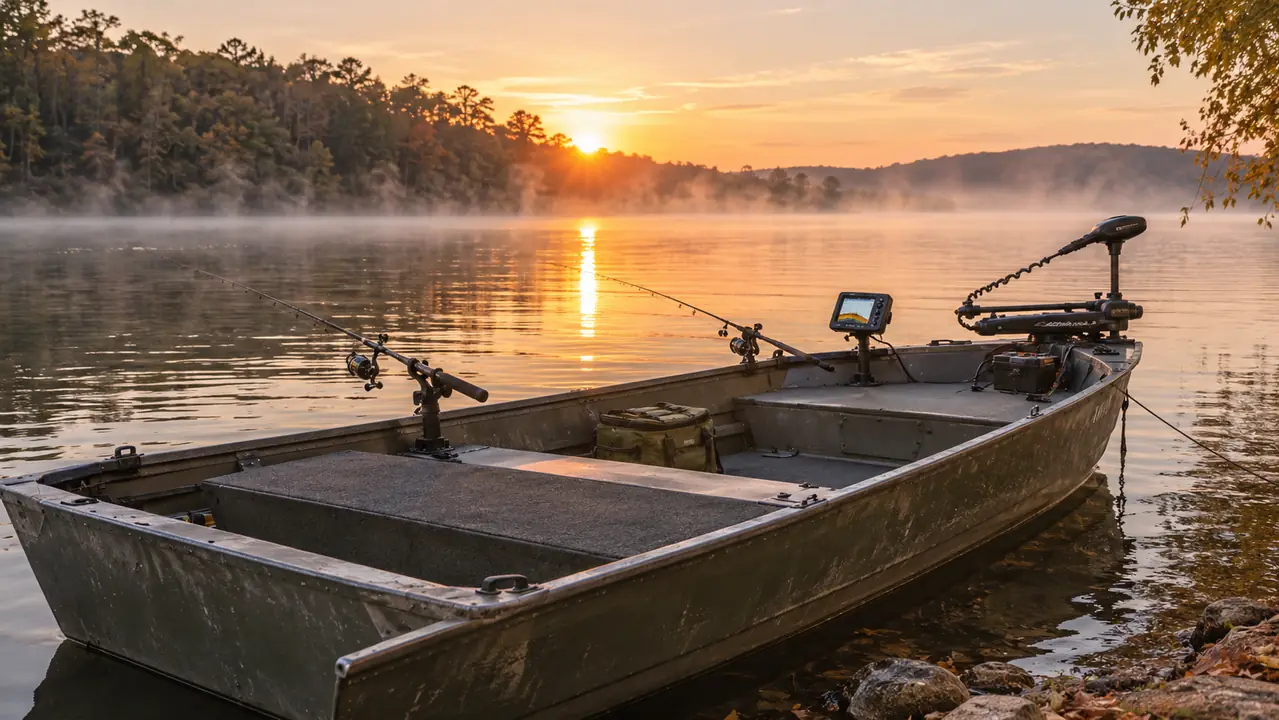
My setup is about as basic as it gets. The Striker 4 is mounted on the front bench seat of my 14-foot aluminum jon boat, right next to where I stand when I am working a bank with a spin rod. I run a small trolling motor up front, so the transducer rides on the transom bracket and the cable runs along the gunwale under a couple of zip ties. The unit itself sits on the included tilt/swivel mount, which sounds fancier than it is. It is a plastic ball-and-socket that lets me angle the screen toward me whether I am sitting or standing.
I use it three ways. First, as a depth sounder: I want to know if I am in 6 feet or 20 feet before I decide where to cast. Second, as a waypoint marker: when I catch fish off a stump or a brush pile, I mark it and come back to it later. Third, and this surprised me, as a navigation aid. The waypoint map on the Striker 4 lets me mark the boat ramp, mark a hazard, and find my way back across a wide reservoir when the sun is going down and every point of land looks the same.
The first time I used it for real was the second Saturday in April on Caesar Creek. The lake was still 52 degrees and I marked a cluster of stumps in 14 feet of water off the main point. I dropped a jig on that spot and caught two bass before I moved. That sold me on the unit faster than any spec sheet could have. A month later I marked the same cluster and the fish had moved out to 18 feet. The Garmin did not catch those fish for me, but it kept me from wasting an hour casting at a spot that had gone dead.
My grandson Caleb, who is 13, has used it more than I have. He took to it in about ten minutes. That tells you something about the interface: it has dedicated buttons, not a touchscreen, and the menus are simple enough that a kid can figure them out without reading the manual. I have owned units where I needed the manual in the boat with me. This is not one of them.
What the Screen Actually Shows
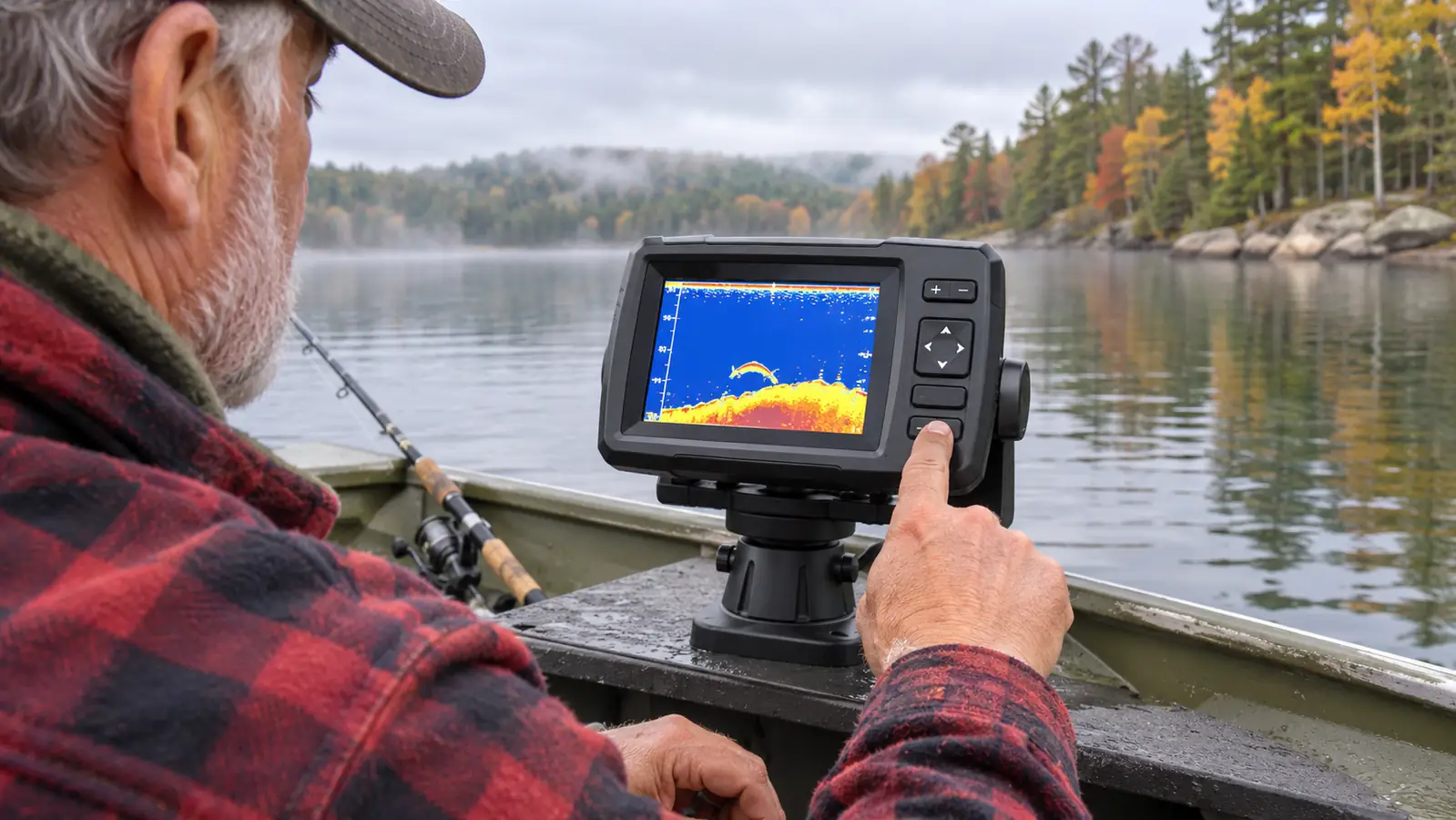
The Striker 4 has a 3.5-inch LCD display, which is small by modern standards. The active screen area is roughly 1.9 by 2.9 inches. That is the first thing you have to make peace with. You are not going to watch a big color screen like the ones on bass boats. You are going to look at a small, bright, readable screen that tells you depth, bottom hardness, and whether there is a fish-shaped mark under the boat.
The sonar is where the Garmin earns its keep. The Striker 4 uses ClearVu scanning sonar, a high-frequency sonar that shows you more of what is in the water around the boat. In practice, that means I see stumps, brush piles, drop-offs, and the occasional fish arch with a clarity I did not expect from a unit in this price class. The maximum measuring depth is 1600 feet, which is far deeper than anything I fish in Ohio, but it tells you the transducer is not the weak link. The weak link on my boat is me, and the unit is honest about that too.
One thing I have learned: the screen lies less when you slow down. When I idle over a drop-off, I can watch the bottom come up and see the breakline clearly. When I run across the lake at trolling speed, the sonar still works, but the picture gets noisier and I do not trust it as much. That is not a Garmin problem. That is a sonar problem. Every unit I have ever used does the same thing.
I have also learned to read the bottom type instead of just the depth number. Hard bottom shows up as a thin, bright line. Mud shows up as a thicker, fuzzier band. On the Great Miami River last August, that distinction is what put me on a channel catfish flat. I found a stretch where the bottom went from hard to soft at 9 feet, anchored just above the break, and caught three catfish in about an hour. The Garmin did not tell me catfish were there. It told me the bottom changed, and I knew where to fish because of it.
GPS and Waypoints: The Feature I Didn't Know I Needed
I bought the Striker 4 for the sonar. I kept it for the waypoint map. The unit has a built-in GPS that lets you view, mark, and navigate to locations like brush piles, stumps, and docks. I marked my first brush pile in May, and by August I had a string of waypoints that reads like a diary of my summer fishing: the stump where I caught three bass in a row, the dock where Caleb landed his biggest crappie, the deep hole in the river that holds catfish when the water is low.
Here is the thing nobody tells you about waypoints: they make you a better angler because they make you honest. When you mark a spot, you are admitting to yourself that you found something worth coming back to. And when you come back to it, you learn whether it still holds fish, or whether the fish moved on. That feedback loop is worth more than any single fish the unit helps you catch.
The GPS is also a safety tool. I fish alone a lot, and I have been out on Caesar Creek when the wind came up fast and the sky went gray. Having the boat ramp marked on the waypoint map means I can point the bow toward the ramp and not have to guess. On a 14-foot jon boat, that is not a luxury. That is peace of mind.
One evening in late September I stayed out past sunset on Caesar Creek, longer than I should have. The wind had laid down and the bite was good, and by the time I pulled the trolling motor up it was dark enough that every point of land looked the same. I hit the waypoint for the ramp and followed it straight in. Without that mark, I would have idled along the bank guessing, and guessing on a reservoir at night is how you find a submerged stump with your hull.
Durability and Day-to-Day Annoyances
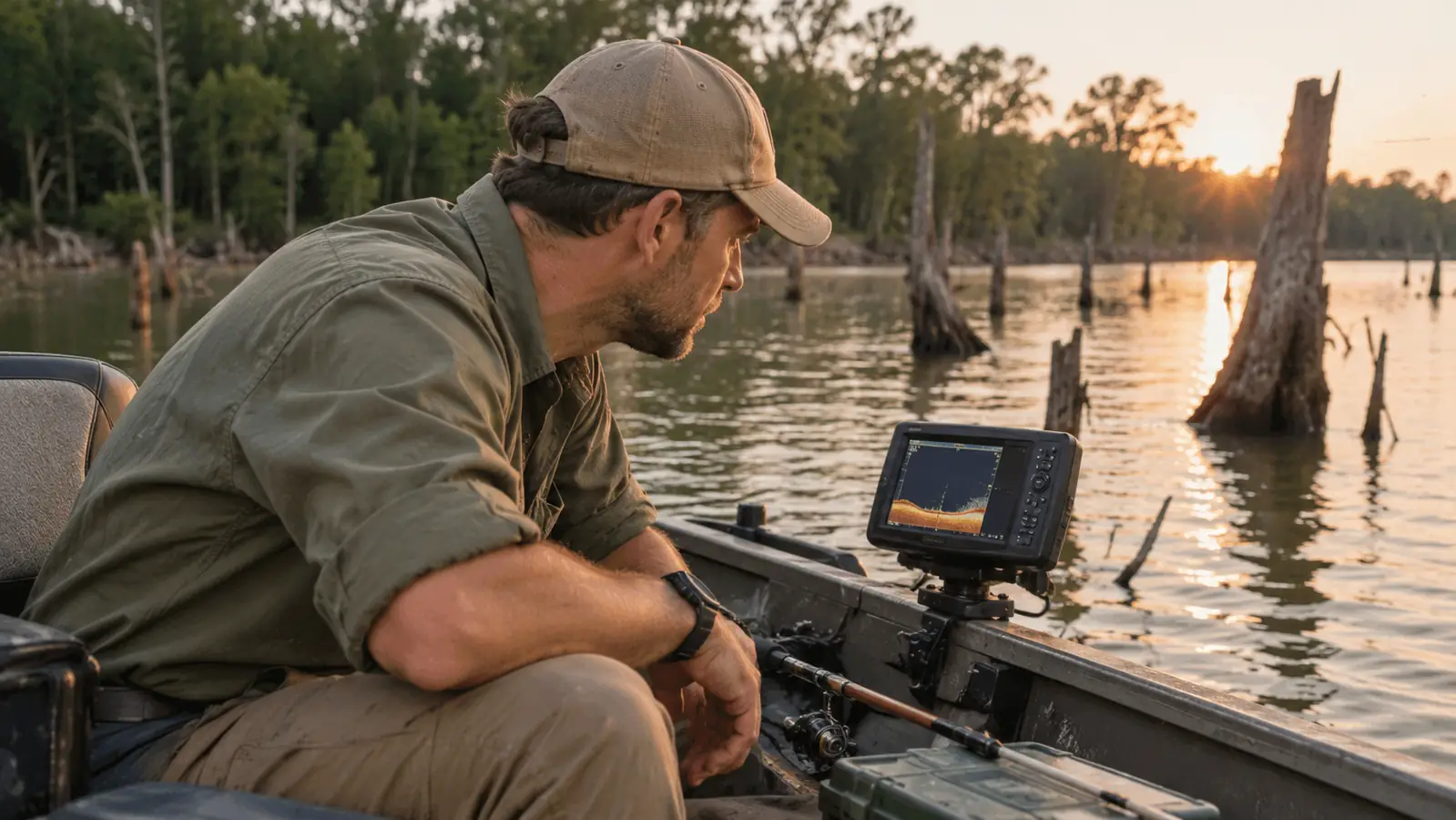
The Striker 4 weighs 8 ounces. I mention that because it tells you what the unit is made of: lightweight plastic, a simple mount, and no moving parts. I have knocked mine against the side of the boat, left it in the sun, run it through a rain shower, and it has not missed a beat. The included power/data cable is long enough to route cleanly, and the transducer cable has held up to being stepped on, which on my boat is the real test.
The annoyances are minor but real. The 3.5-inch screen is small, and if you fish with a partner who likes to watch the screen, you will both be leaning in. The buttons are dedicated and the interface is simple, but that means you have to press a button several times to change a setting that a touchscreen would handle with one tap. The included documentation is fine, but the included components list is short: the unit, the power/data cable, the tilt/swivel mount, the transducer, and the transom mounting hardware. There is no carrying case, no bag, no screen cover. I solved that with a cheap sunglass pouch, which works fine.
The 1-year limited warranty is what it is. I have not needed it, and I would not expect to. But if you buy this unit, register it and keep the receipt somewhere you can find it. That is just common sense with any electronics.
The one thing that has worn is the tilt/swivel mount, and even that is not worn out. It has loosened just enough that the screen will slowly tilt down when I hit a good wake, and I reach over and nudge it back. It took me a full season to notice, and I could fix it with a drop of thread locker if it ever got worse. For a unit that cost what this one costs, that is not a complaint. That is me looking for something to say in a long-term review.
The screen lies less when you slow down. When I idle over a drop-off, I can watch the bottom come up and see the breakline clearly.
What I Liked
- ClearVu scanning sonar shows stumps, brush piles, and fish arches clearly for the money
- Waypoint map with GPS makes it easy to mark brush piles, stumps, docks, and the boat ramp
- Dedicated buttons and simple menus, easy enough for a 13-year-old to learn in ten minutes
- Weighs 8 ounces and runs on battery power, so it works on a jon boat, kayak, or from the bank
- The included tilt/swivel mount and transom hardware are all you need to get it on the boat
Where It Falls Short
- The 3.5-inch display is small, and two people watching it at once means both are leaning in
- Changing settings means multiple button presses, no touchscreen shortcuts
- No carrying case, bag, or screen cover in the box
- The 1-year limited warranty is short, so register the unit and keep your receipt
- The picture gets noisier at speed, so you have to slow down to trust the sonar
Who This Is For
The Garmin Striker 4 is for the angler who wants to know how deep the water is, where the structure is, and whether there are fish under the boat, without spending a week learning a new piece of electronics. It is for the jon boat fisherman, the kayak angler, the bank fisherman who saves up for one good piece of gear, and the grandfather who wants his grandson to learn that fish relate to structure, not luck.
It is also for the angler who fishes a mix of water. I take mine from a 14-foot jon boat on a reservoir to a farm pond where I fish from the bank. The unit runs on battery power, so I can set it on the bank next to me and watch the bottom drop off from shore. That versatility is rare at this price.
Who Should Skip It
If you fish big water, run a bass boat, or want a large color screen with mapping and touch controls, the Striker 4 is not for you. The 3.5-inch display is too small to be the primary screen on a serious tournament boat, and the interface, while simple, is not the fastest way to navigate complex menus. If you already own a unit with a 5-inch or larger screen, this will feel like a step backward.
I would also tell you to skip it if you want a unit that does everything without any learning curve. The Striker 4 is simple, but simple does not mean zero. You will spend an afternoon reading the documentation and another afternoon on the water figuring out what the sonar is telling you. That is not a flaw. That is fishing. But if you are not willing to put in that time, no fish finder will help you.
Still the right buy for a small boat
After months on the water, the Garmin Striker 4 is the fish finder I recommend to anyone who fishes from a jon boat, kayak, or the bank. It marks structure, holds waypoints, and has never left me guessing about depth. Check today's price on Amazon and see if it fits your boat.
Amazon Check Today's Price on Amazon →