
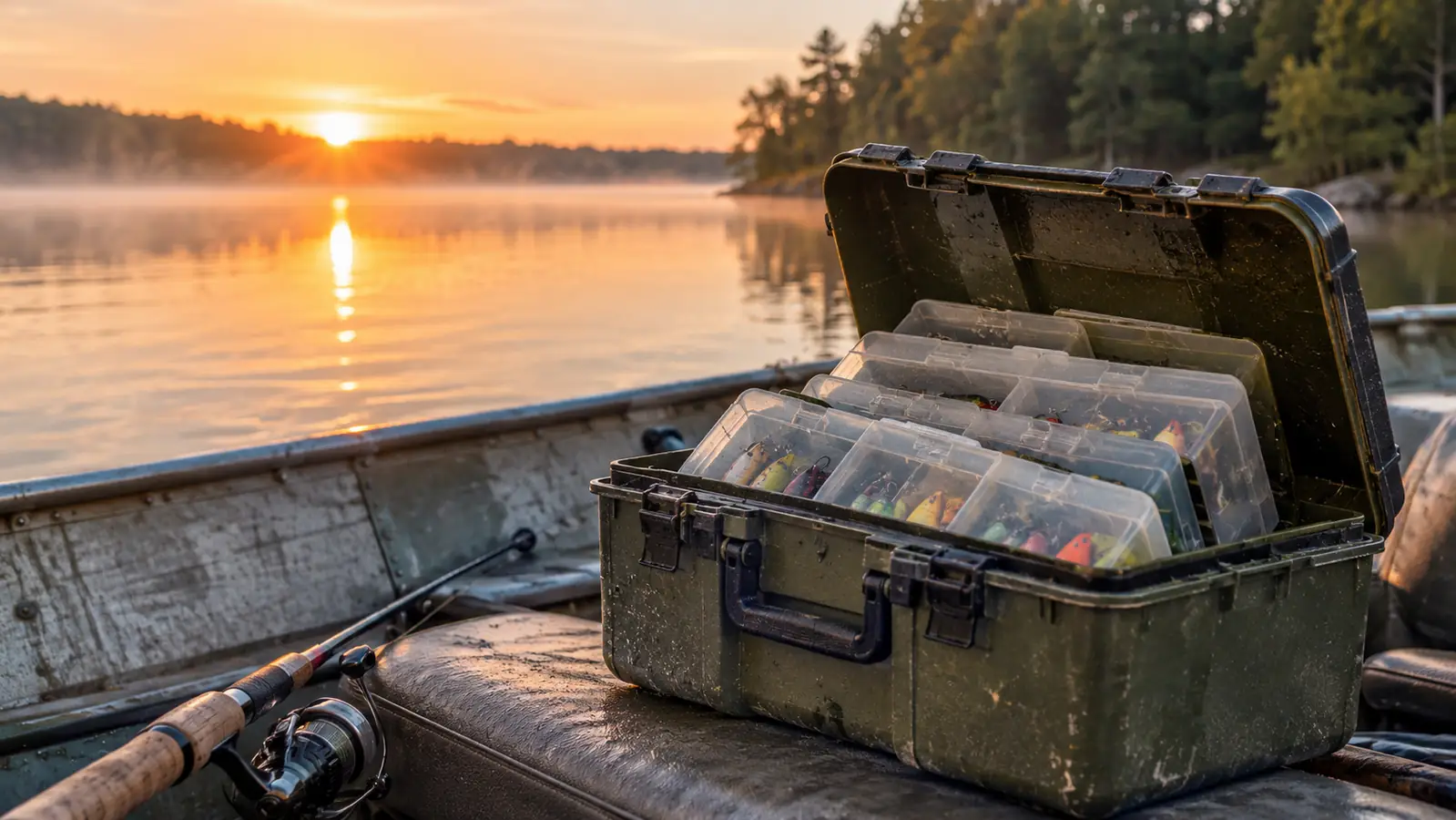
Every spring I meet the same man at the same ramp on Caesar Creek Lake. He carries a tackle box the size of a small suitcase, sets it on the hood of his truck, and spends the next twenty minutes digging through it with both arms like he is reaching for something behind the water heater. By the time he finds the jig he wanted, the fish have stopped biting and his morning is shot. I know the feeling. I did the same thing for years, and I have the tangled spinnerbait mess in my garage to prove it.
Organizing a tackle box for bass and panfish is not about buying a prettier box. It is about deciding what you actually use, giving every bait a home, and making the ones you reach for most the easiest to reach. I have fished Ohio reservoirs, the Great Miami River and farm ponds for about 45 years, mostly with my grandson Caleb, and I have settled on a system that works. It happens to live in a Plano Angled Tackle System, but the steps work in any hard box worth carrying.
Start with a box that shows you what is inside
The Plano Angled Tackle System holds three Stowaway utility boxes at a 15 degree angle, so you can see the baits without pulling every tray out onto the boat floor. It is the box I have used for the last three seasons, and it is a fair place to start for anyone tired of digging.
Amazon Check Today's Price on Amazon →Step 1: Empty the box and sort everything into piles
You cannot organize a tackle box you have not looked inside for two years. Dump every tray, every pocket, every loose hook out onto a clean table. I use an old flannel blanket on the picnic table so small jig heads do not roll into the grass. Sort as you go: hard baits in one pile, soft plastics in another, hooks and weights in a third, terminal stuff like swivels and snaps in a fourth.
Be honest with yourself while you sort. That bag of half-chewed soft plastics from three seasons ago? The crankbait with the bent bill and the paint flaking off? That is not a collection, it is clutter, and it is the reason you cannot find the bait that works. I keep a coffee can on the bench for anything I have not tied on in two years. If it does not earn its spot back by the end of the season, it goes to Caleb's first box or the trash. When I did this the first time, on a rainy Saturday in March of 2022, I filled that coffee can to the rim and still threw away a grocery bag of rusted hooks and melted plastics. I kept exactly 14 baits out of what looked like a lifetime supply, and I caught more fish that season with those 14 than I had the year before with the whole mess. That was the day I stopped carrying a tackle box and started carrying a system.
The other thing sorting does is show you what you actually fish for. Bass and panfish do not need the same baits in the same quantities. A bluegill bite wants small hooks, small jigs and a bobber or two. A bass bite wants bulkier soft plastics and bigger crankbaits. When the piles are on the table, the balance of your box becomes obvious, and most of us discover we are carrying three times as much as we use.
Step 2: Pick one utility box per job
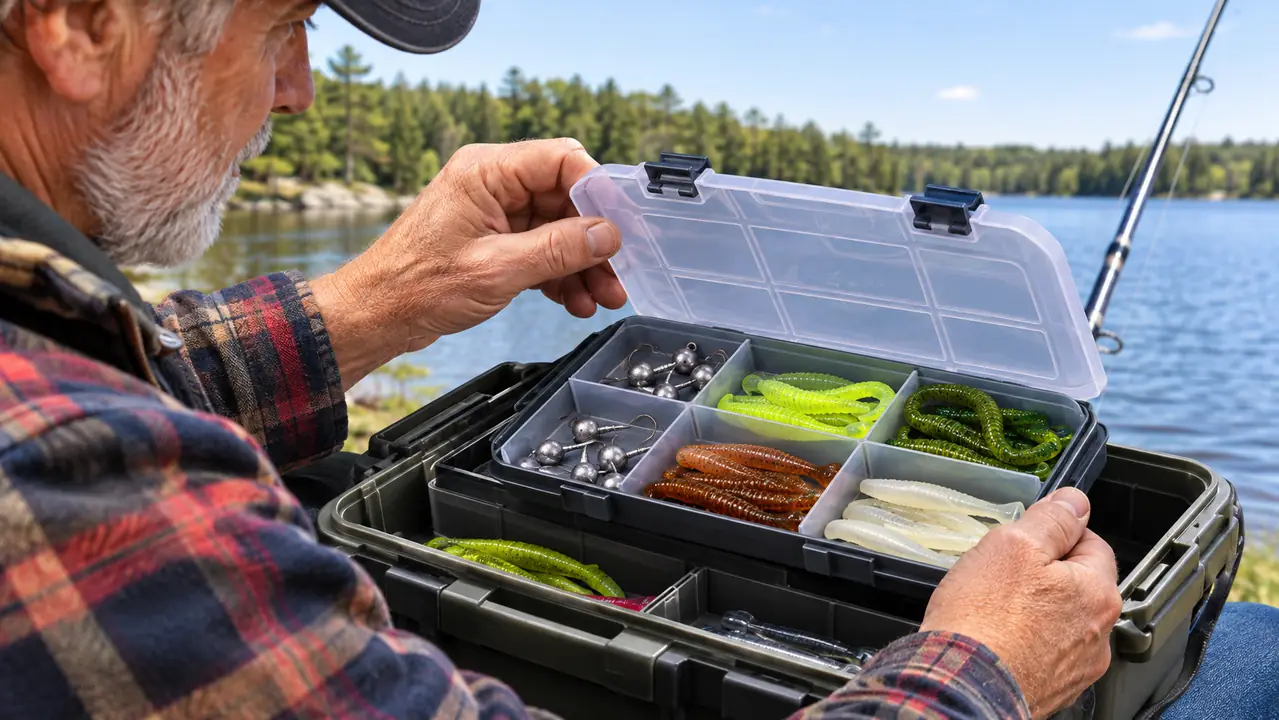
The mistake most people make is treating the tackle box like one big drawer. It is not. It is a set of smaller boxes, and each one should have one job. The Plano Angled Tackle System comes with three Stowaway utility boxes, and that is exactly the right number for bass and panfish: one for bass hard baits, one for bass soft plastics and jig heads, one for panfish rigs and terminal tackle.
If you fish more than that, buy a fourth utility box and swap it in when the trip calls for it. The point is not to limit yourself. The point is that when you open the box, you know which tray holds the 1/4 ounce jig heads without looking. My grandson Caleb can grab the panfish tray and rig a bobber rig in the time it takes me to find my sunglasses, because the tray has one job and everything in it belongs there.
The Plano Stowaway boxes that come with this system have adjustable dividers, which matters more than most people think. You can widen a compartment for bulkier soft plastics and narrow one for hooks, so the tray fits what you carry instead of the other way around. Take the five minutes to set the dividers before you load the baits, not after. The first season I skipped this step and left the dividers wherever they landed from the factory. By May, the 1/4 ounce jig heads had rattled into the crankbait compartment and the soft plastics were spilling over into the hook section, and I was back to digging every trip. I reset the dividers one evening before a trip to a farm pond, and the box stayed exactly the way I set it for the rest of the year. That is the whole argument for adjustable dividers: you set them once, and they hold.
Step 3: Load heavy stuff on the bottom, light stuff on top
Gravity is going to rearrange your tackle box whether you like it or not. The heavy stuff, the jig heads, the weights, the big spinnerbaits, wants to settle. The light stuff, the soft plastics, the little hooks, wants to drift. Work with gravity instead of against it and your box stays organized a lot longer.
In the Plano Angled Tackle System, that means the bottom of the main compartment carries the bass hard baits and heavier jig heads. The trays sit at a 15 degree angle, which sounds like a small detail until you have opened the box on a moving boat and watched a tray stay put instead of sliding out into your lap. The angled presentation also means the baits in the top tray are visible the moment you pop the latches, so the stuff you use most is the stuff you see first.
Keep the panfish tray on top. Bluegill and crappie gear is small and light, and it is the gear you will re-rig most often when you are fishing a farm pond with Caleb. If the panfish tray is buried under two pounds of bass plastics, you will stop reaching for it, and then you will stop catching panfish. The whole rig, shell and three trays included, weighs 5.7 pounds and measures 18 inches long, 9.5 inches wide and 11 inches tall. That is small enough to sit on the bench seat of my 14-foot jon boat next to a rod butt, and light enough to carry from the truck to the bank in one hand. There is no room for a tray to wander far, and that is part of why the gravity system holds.
Step 4: Organize by what you reach for, not by what looks pretty
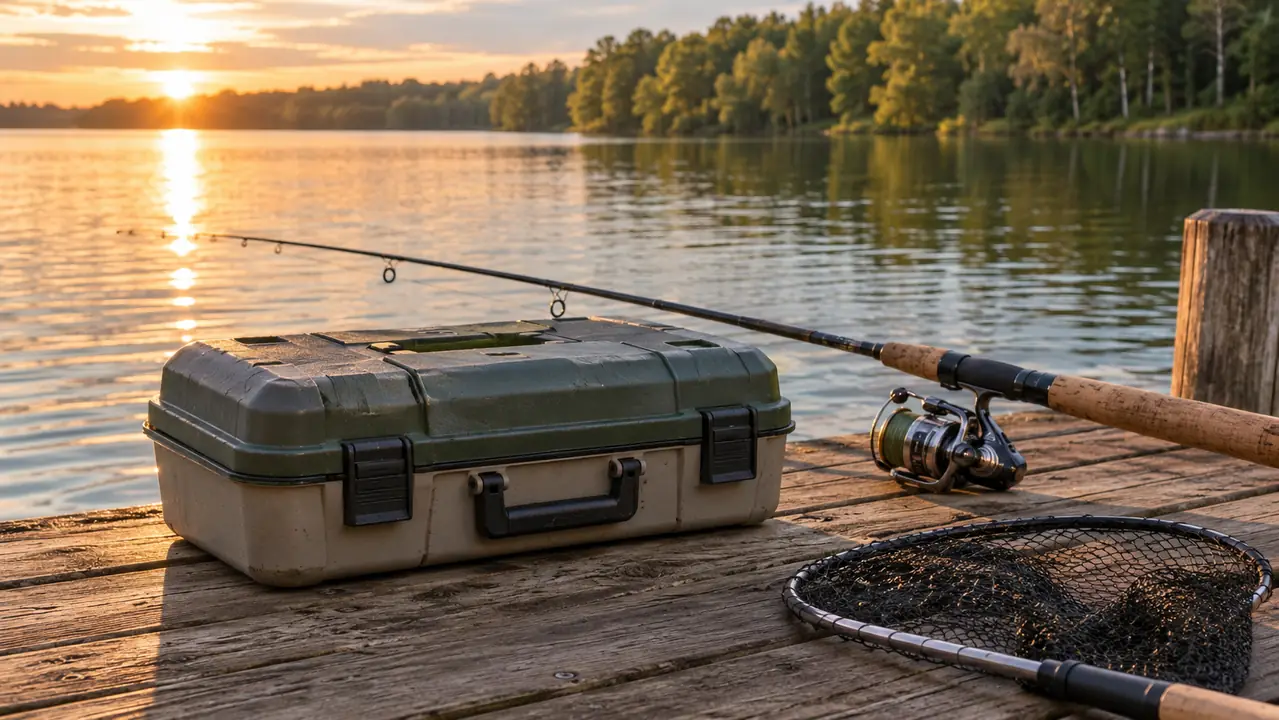
A tackle box organized by color is a tackle box organized for a catalog photo. Organize by fishing situation instead. When the bass are chasing shad on a windy point, you want the shad-colored crankbaits without thinking. When the bluegill are bedded up near the dock, you want the little chartreuse jig in the panfish tray. Group baits by when you throw them, and the box starts working like a tool chest instead of a junk drawer.
The Plano Angled Tackle System's main compartment presents the utility boxes at that 15 degree angle, and the DuraView covers and doors let you see the baits before you open anything. That is the whole trick: if you can see it, you can grab it, and if you can grab it fast, you fish more and dig less. On a small jon boat with a trolling motor, digging less is the difference between getting a bait in front of a fish and watching the fish move on.
One habit that helps: put the bait you caught the last fish on back in the exact same compartment it came from. It sounds like nagging, but it is the single cheapest organization tool ever made. It costs nothing, and it keeps the box from returning to chaos by the end of June.
Step 5: Carry a small repair and terminal kit in the pocket
Every organized tackle box still needs a place for the little stuff that does not fit a tray: snap swivels, split rings, a small hook sharpener, extra bobbers, a spool of line for retying. The Plano Angled Tackle System includes a utility pocket for exactly this. Keep it for terminal tackle and small tools, not for loose soft plastics. The moment loose plastics go in the pocket, the pocket becomes a junk drawer and the system is dead.
I keep a tiny plastic container of snap swivels and barrel swivels in the pocket, plus a hook file and a bobber or two. When Caleb breaks off a rig on a snag, which happens about twice a trip on the Great Miami, he can retie from the pocket without opening a single tray. Last July we were fishing below a riffle when he hung a spinnerbait on a sunken branch and the line popped at the knot. He had a fresh swivel and a new hook out of the pocket and was casting again before I had my sunglasses on. The guy on the next gravel bar was still digging through a soft-sided bag, and I watched him give up and move on. That one retie took maybe ninety seconds from snag to cast, and we caught two more bluegill off the same riffle before the sun got high. That is the test of a good system: the most common failure on the water takes one motion to fix.
What Else Helps
A few things that make the system work better, none of which cost much. First, keep a small dry bag or a plastic zip bag for wet soft plastics. A wet worm thrown back into a dry tray makes everything in that tray smell like a bait shop floor and rusts the hooks around it. Second, put a piece of tape on the end of each utility box and write what is inside. You can see the baits through the DuraView covers, but the tape makes it readable from across the boat. Third, go through the box once a month and pull the rusted hooks and the soft plastics that have melted into the dividers. Ten minutes a month beats one angry hour at the ramp every spring.
The whole trick is simple: if you can see it, you can grab it, and if you can grab it fast, you fish more and dig less.
I have used the Plano Angled Tackle System for three seasons now, and the honest tradeoff is that it is not the biggest box you can buy. It holds three utility boxes, and if you are the kind of angler who needs nine trays of crankbaits on a Tuesday afternoon, this is not the box for you. For bass and panfish on Ohio reservoirs, rivers and farm ponds, it is the right size. The Plano Stowaway boxes are interchangeable, so you can swap a tray out for a different trip and keep the same shell. The hard shell takes the beating a boat seat gives a box, and the 15 degree angle keeps the baits visible every time you pop the latches.
Give the five-step system a fair shot this season
Sort the clutter, give each bait a home, and let the angled trays do the rest. If the Plano Angled Tackle System sounds like the right size for your water, today's price is worth a look before the season gets busy.
Amazon Check Today's Price on Amazon →