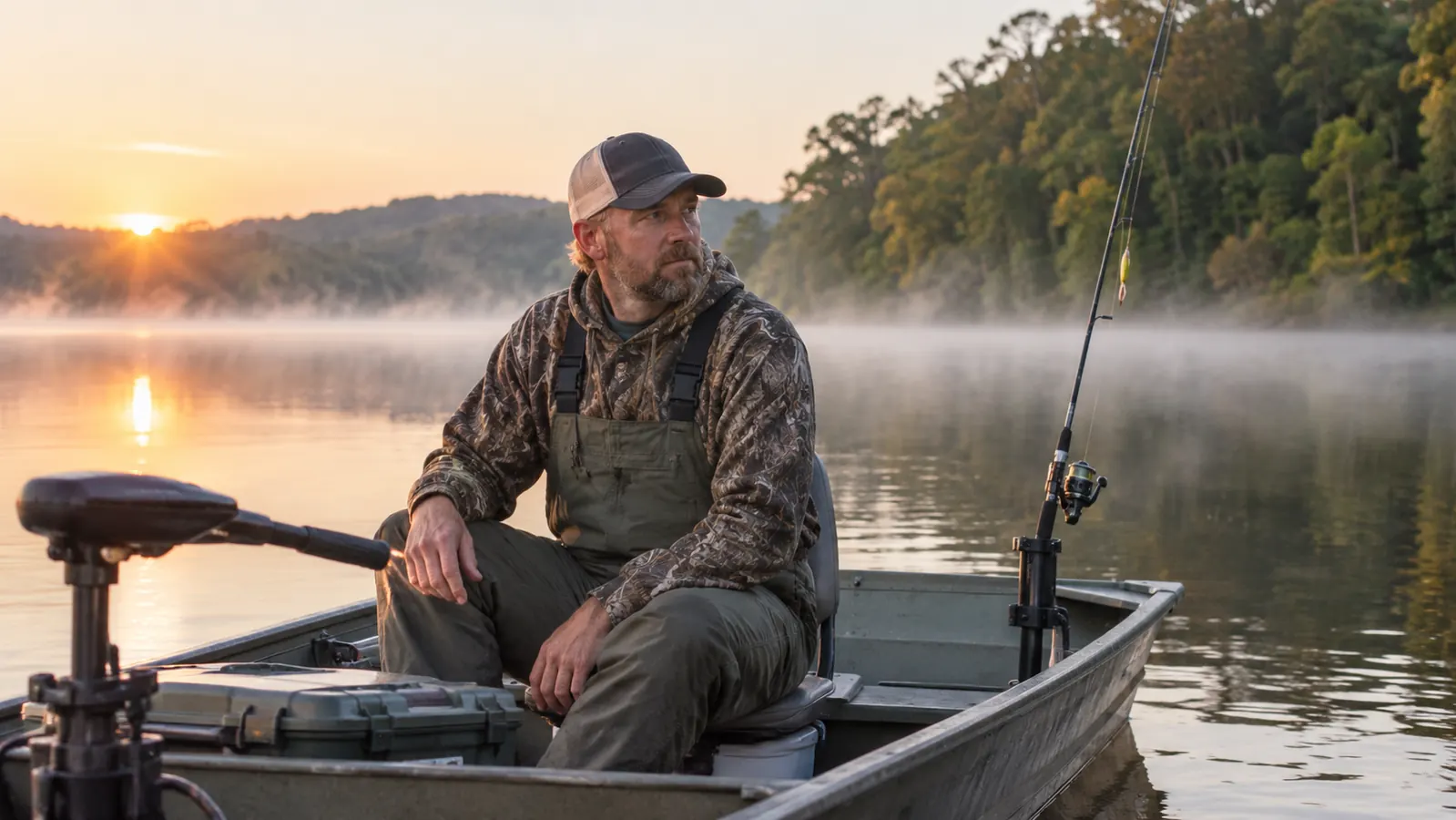
Crappie are the fish that made me a believer in a good spinning combo. For years I chased them with whatever rod I had leaning in the corner of the garage, and I caught some. But I also lost plenty, mostly because the reel was cheap and the rod was too soft to set a hook through a crappie's paper mouth. Then I bought a KastKing Centron spinning combo, the 7-foot medium, and it changed how I fish for them. This is the plain-spoken version of how I'd walk you through it, from my side of a 14-foot jon boat on Caesar Creek Lake.
The Centron is a 2-piece rod and reel combo with a 3000-series spinning reel, a medium power rod, and an 84-inch total length. It is made for exactly the kind of fishing I do most: casting small jigs from the bank or a small boat, keeping the line tight, and feeling the light bite that crappie give before they decide to take the bait. If you have never fished for crappie with a spinning combo, or if you have tried and given up because you couldn't feel the bite, this guide is for you.
The spinning combo I reach for when the crappie are biting short
The KastKing Centron spinning combo is the rod and reel I keep rigged for crappie all spring. It is light enough to cast a 1/16-ounce jig all day and stiff enough to set the hook through a paper mouth.
Amazon Check Today's Price on Amazon →Step 1: Rig the combo for crappie, not for bass
The Centron I use is the 7-foot medium, which KastKing lists with a 3000 reel and a medium heavy rod option as well. For crappie I want the medium, because it loads up on a cast and loads down on the fight. The rod length of 84 inches gives me the reach to skip a jig under an overhanging branch, and the 2-piece design means I can carry it in the cab of my truck without taking up the whole seat.
The reel comes spooled with braided line in the specs, listed at 14-pound line weight and a line capacity of 14/100. For crappie I usually step down to 8-pound mono for the last 20 yards, because it casts a light jig farther and the fish do not see it as easily. I tie a three-foot leader of 8-pound fluorocarbon to the braid with a small barrel swivel and tie the jig directly to that. The swivel stops the line from twisting when the jig spins on the fall, which used to drive me crazy with a cheap reel. I learned this the hard way on the Great Miami River one windy afternoon, when every third cast ended in a wind knot that took five minutes to pick out. Since I switched to the leader, I can count the wind knots I have had on one hand. But if you want to keep the braid on, it works too. The key is to use a light leader or a smaller diameter line so your 1/16-ounce jig falls at a natural rate.
The Centron has a right-hand orientation and a 5.2 gear ratio, which means the reel picks up line fast. That matters more than you think. Crappie often hit on the fall, and if you have to crank a lot of slack before you feel the fish, you will miss half the bites. With a faster reel, you come tight quicker and you hook more of the short strikers.
Step 2: Find the fish at the depth they are holding
Crappie are not always on the bottom and not always on top. In the spring they move shallow to spawn, and in the summer they suspend over deeper water. The mistake most new anglers make is fishing the same depth all day. I keep a simple rule: if I am not getting bites in 20 minutes, I change depth before I change baits.
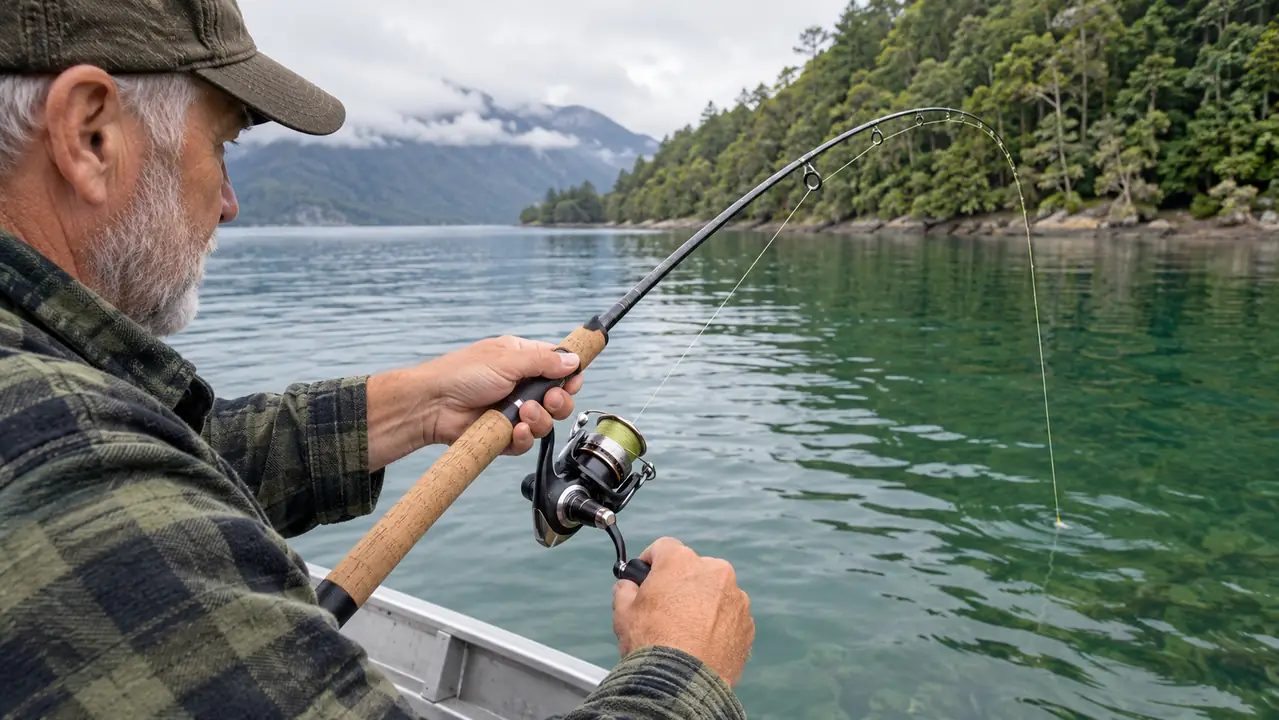
The Centron's medium power rod lets me feel the difference between a jig that is ticking weeds and a jig that is hanging in open water. I cast out, let the jig fall on a tight line, and count. One Mississippi, two Mississippi. When I find the depth where the bite comes, I repeat that count on every cast. On Caesar Creek in late April, that is often 4 to 6 feet down over a 12-foot flat. One morning last spring I made eleven casts at a five-count and got one short tap. I switched to a seven-count, letting the jig fall two more feet, and the next three casts all produced fish. That two-foot change was the whole difference between a slow morning and a limit. The same thing happens on the Great Miami River, only the depth changes with the current, so I re-count every time I move to a new stretch of bank. On the river, the count is usually shorter, three or four seconds, because the fish hold tighter to the bottom in moving water.
From the bank, the same rule applies. I cast parallel to the bank instead of straight out, because crappie cruise the edge of the drop-off, not the middle of the lake. The 7-foot rod gives me the leverage to keep the line tight while I work the jig back slowly, and the EVA foam grip stays comfortable even when my hands are wet and the air is cold.
Step 3: Match the bait to the water and the season
I carry three baits for crappie and almost nothing else: a 1/16-ounce jig in white or chartreuse, a small minnow under a bobber, and a 2-inch soft plastic on a light jig head. In the spring, when the water is still cold, the minnow under a bobber outfishes everything. In the summer, when the fish are aggressive, the jig is faster and covers more water. I remember a cold morning in early April when the water was still in the high 40s and the jig bite was dead. I switched Caleb over to a minnow under a bobber, set the bobber about three feet up the line, and we took nine fish off one brush pile in under an hour. The jig went back on by Memorial Day, but I do not leave the dock without the minnow bucket anymore. That morning taught me that the bait matters less than matching the mood of the fish, and the Centron made it easy to switch from one to the other without retying the whole rig.
The KastKing Centron's 3000 reel casts a 1/16-ounce jig surprisingly well for a combo in this price range. The 5.2 gear ratio helps me retrieve fast when I want a reaction bite, and slow when I want to feel the jig tick the bottom. The rod's medium power loads on the cast, so even a light bait goes where I aim it instead of flopping short.
One thing I have learned the hard way: do not set the hook like you are setting it for bass. Crappie have thin mouths, and a hard hookset rips the bait right out. With the Centron's medium power rod, a firm snap of the wrist is enough. The rod does the rest. My grandson Caleb learned this on his first crappie trip, and he lost three fish before he stopped swinging like he was fighting a muskie.
Step 4: Work the jig slow, then slower
Crappie are not bass. They do not usually chase a fast lure across the whole cove. They want something that looks like an easy meal drifting past their nose. So I work the jig with a lift-and-pause: lift the rod tip, let the jig fall on a slack line, and wait. Most of my bites come on the pause, right as the jig starts to fall again.
The Centron's EVA foam handle and 7-foot length make this easy to do for hours. The rod is light enough that my wrist does not fatigue, and the reel's smooth drag lets a crappie run a little without pulling the hook. I keep the bail closed and the line between my index finger and the rod blank so I feel the tick of the bite before I even see the line twitch.
If the bite is short, meaning the fish are tapping without committing, I downsize the bait. That is the single most useful trick I know for crappie. A 1/16-ounce jig becomes a 1/32-ounce jig, or I tip the jig with a tiny piece of worm. The first time I tried this, I was skeptical that one size smaller could matter. Then I watched a fish tap the 1/16-ounce jig four times and swim off, and on the very next cast the 1/32-ounce version got eaten on the fall. Now it is the first thing I do whenever the bites get short, before I change color or move spots. It costs nothing and it works more often than it does not. The same trick works in a current, where a heavier bait looks unnatural and a lighter one drifts past the fish at the speed they want. The Centron casts these micro baits well because the rod loads deep into the blank, and the reel's light spool lets the bait pull line off easily.
Step 5: Land them gently and keep them cold
When you feel the bite and set the hook, keep the rod tip up and let the medium power rod absorb the fight. Crappie do not run like bass, but they do shake their heads, and a loose line is how they throw the hook. The Centron's 84-inch rod gives me the angle to keep pressure on the fish from the moment it is hooked to the moment it is at the boat.
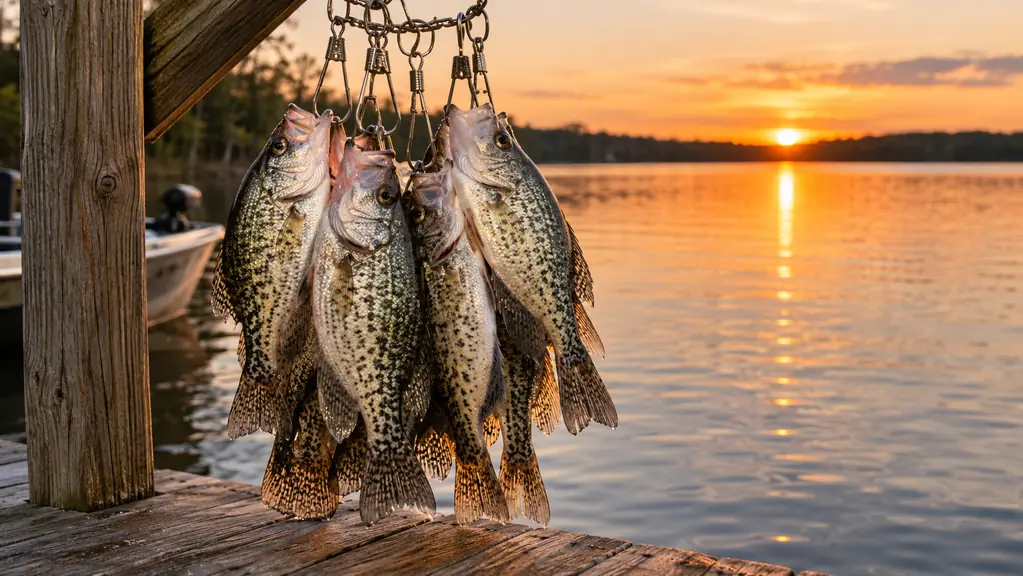
I use a small rubber net for crappie, not a big bass net. The fish come over the side calm, and I can get the hook out without touching the gills. If I am keeping fish for supper, they go straight into a cooler with ice. Crappie are some of the best-eating fish in Ohio water, but only if you take care of them from the second they hit the deck.
The KastKing Centron has held up to three seasons of this treatment, including plenty of trips where it rode in the bottom of the jon boat under a pile of life jackets. The aluminum and graphite construction in the specs has not let me down, and the stainless steel guides have not rusted, even after days on the Great Miami River. That is the kind of reliability I want in a combo I hand to a 13-year-old grandson.
What Else Helps
A few things make crappie fishing easier that have nothing to do with the rod and reel. A pair of polarized sunglasses helps you see the fish before they see you. A small tackle box with pre-tied jig heads saves you from tying knots in the wind. And a stringer or a small cooler keeps the catch fresh. None of these cost much, and all of them make the day better.
I also keep a second Centron in the boat, the 7-foot-6 medium heavy, because Caleb likes to fish a bobber rig while I cast a jig. The medium heavy is stiffer, which makes it better for fishing a minnow under a bobber in a little wind. Between the two of us, we cover the water column and we both stay busy. If you fish alone, one combo is plenty. If you fish with a kid, two is better.
The Centron's medium power rod is stiff enough to set the hook through a crappie's paper mouth and soft enough that a 13-year-old can cast a 1/16-ounce jig all afternoon without wearing out.
Set up your own crappie rig the way I set up mine
The KastKing Centron spinning combo is the rod and reel I trust for crappie on Ohio reservoirs, rivers and farm ponds. It casts light jigs, handles a hard-fighting fish, and takes a beating in a small boat.
Amazon Check Today's Price on Amazon →